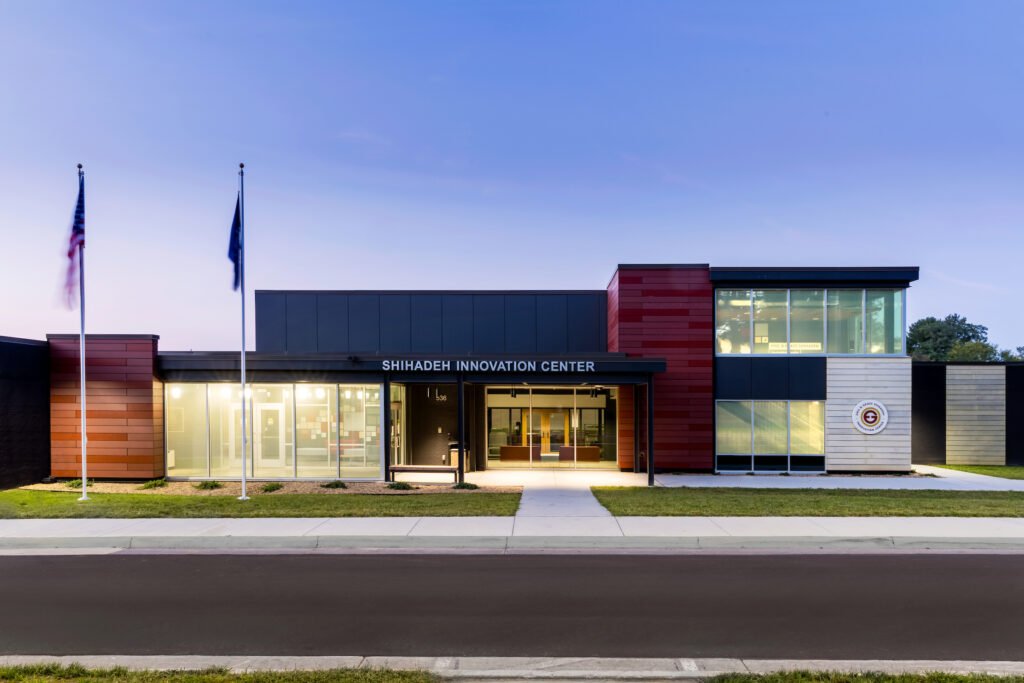
As school districts across Virginia work to expand opportunity and strengthen workforce pathways, Career & Technical Education (CTE) has become an essential part of preparing students for success in a rapidly changing economy. This momentum is reflected in Ted Dintersmith’s new documentary Multiple Choice which highlights innovative learning environments across the country, including Winchester Public Schools’ Emil & Grace Shihadeh Innovation Center, designed by VMDO.
The film will be screened during the VSBA Annual Conference on Wednesday, November 19 at 8:00pm, offering board members an inside look at how purposeful design can elevate high-quality CTE programming.
Why the Innovation Center Matters for Virginia School Districts
CTE enrollment continues to rise statewide and nationally. Students and families are seeking programs that combine academic rigor with hands-on, project-based learning. Recent trends underscore this shift:
- Community college vocational programs increased 13.6% in Fall 2024.
- 63% of high school students view CTE as equal in value to a four-year degree.
- 94% of parents support expanding CTE options.
- CTE concentrators graduate at 96%, far above national averages.
The Shihadeh Innovation Center responds directly to these trends, broadening access to relevant, career-aligned programs while strengthening partnerships with higher education and industry.
We should have this in every single region of the Commonwealth. That's how were going to be successful
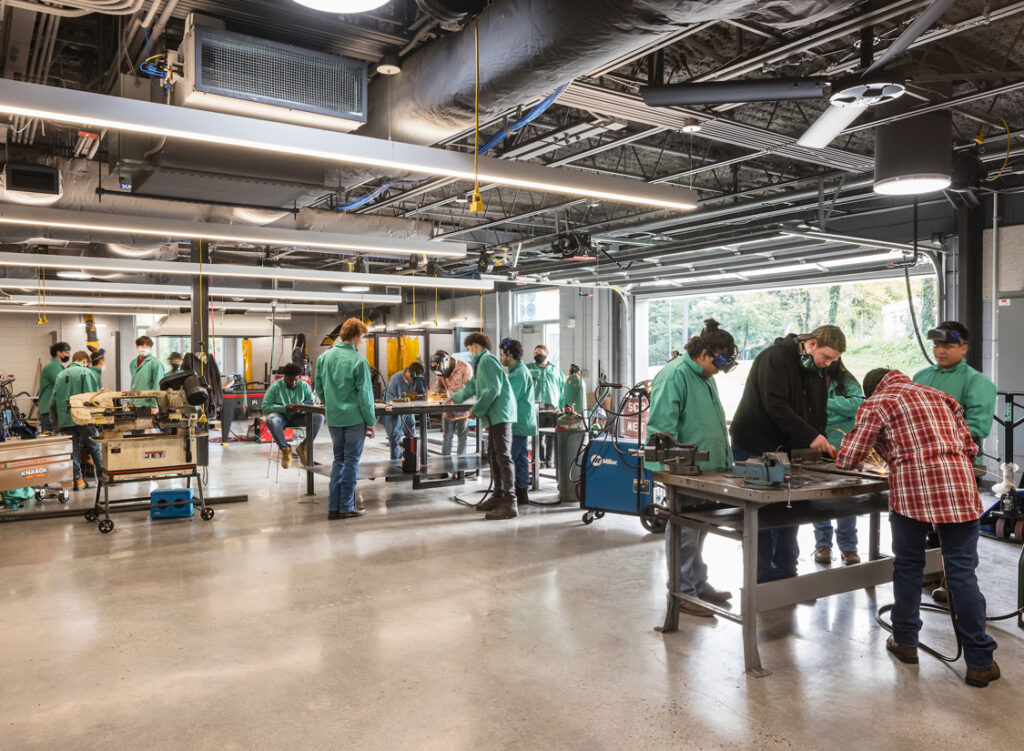
Design that Supports Project-Based Learning
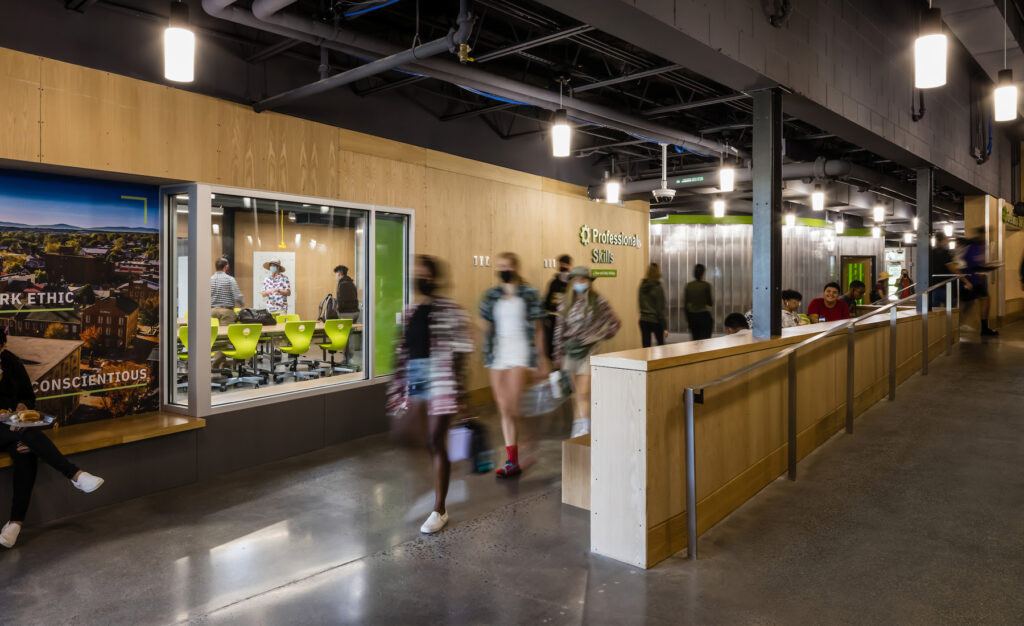
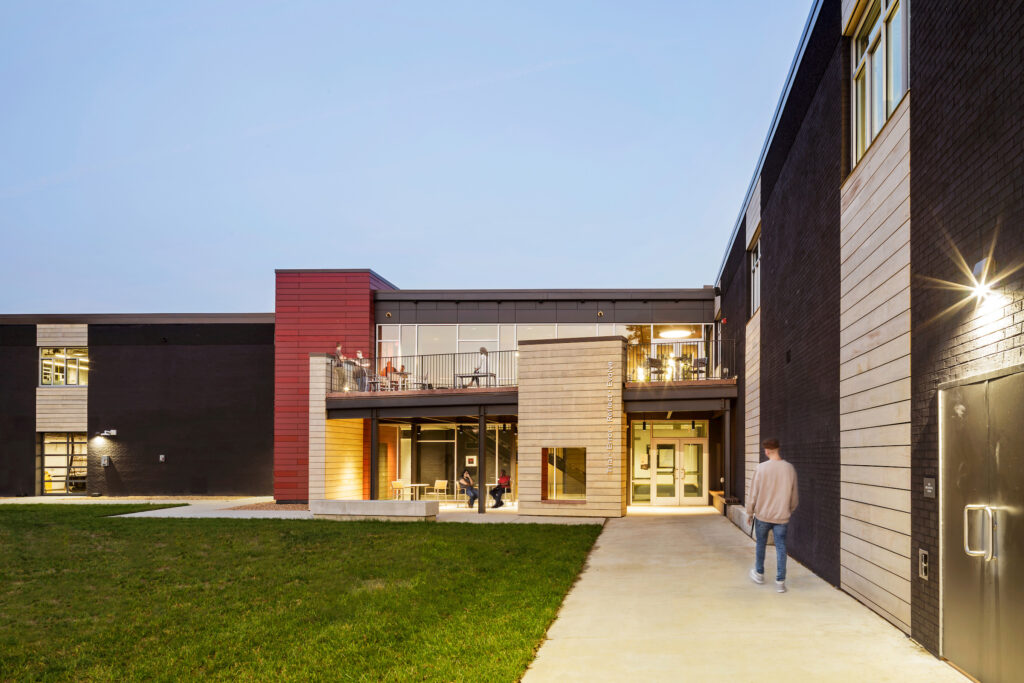
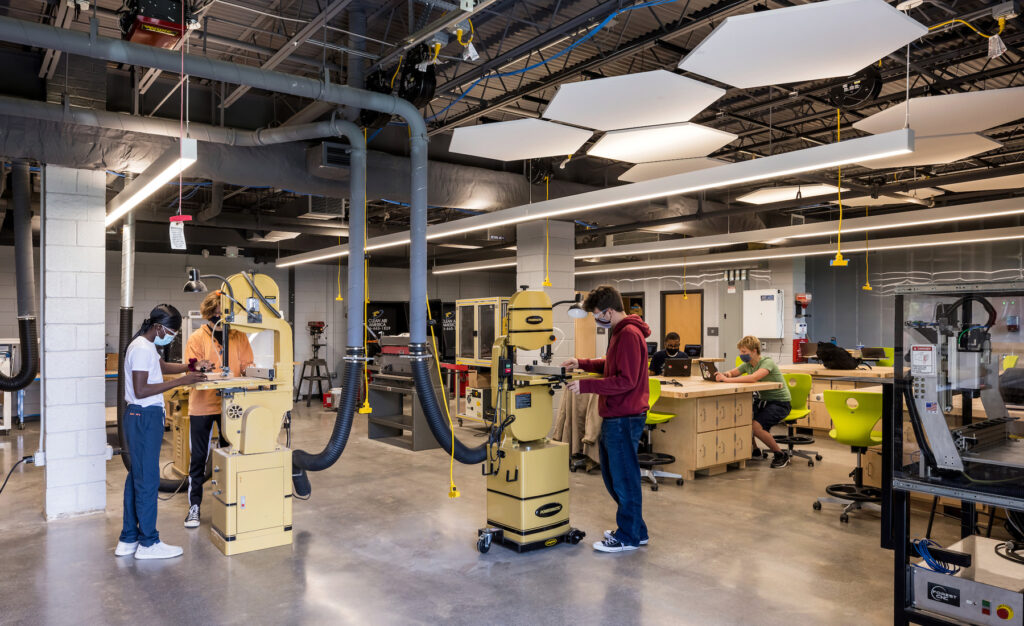
Project-based learning is central to CTE and an essential driver of the design approach for the Innovation Center. Working closely with Winchester Public Schools, VMDO developed a learning environment organized around visibility, flexibility, and hands-on learning. High-intensity, durable workshop labs support programs ranging from engineering and cybersecurity to architecture, networking, and advanced technologies. Flexible instructional spaces adapt as programs evolve, while shared hubs, informal collaboration zones, and a central commons weave programs together and encourage interdisciplinary exploration.
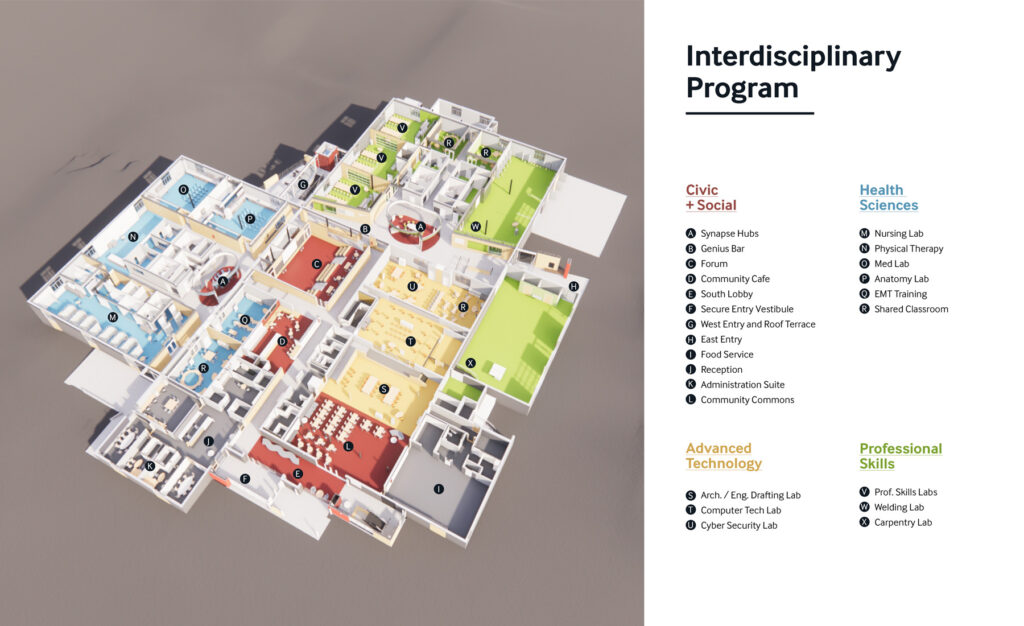
We connect Career Technical Education with core academic education - there is truly innovative learning happening in this building
Design That Encourages Discovery and Growth
Throughout the building, design strategies emphasize transparency, natural light, healthy materials, and energy efficiency. These choices support both student wellbeing and long-term sustainability, creating a place where learning feels active, engaging, and connected to the broader community.
The project also reinforces an important educational value: that learning is an iterative process. As the school’s principal often notes, the Center provides room to “fail forward,” an essential part of developing confidence and capability. The design supports this by giving students the time, space, and visibility they need to explore ideas, practice skills, and grow through hands-on work.
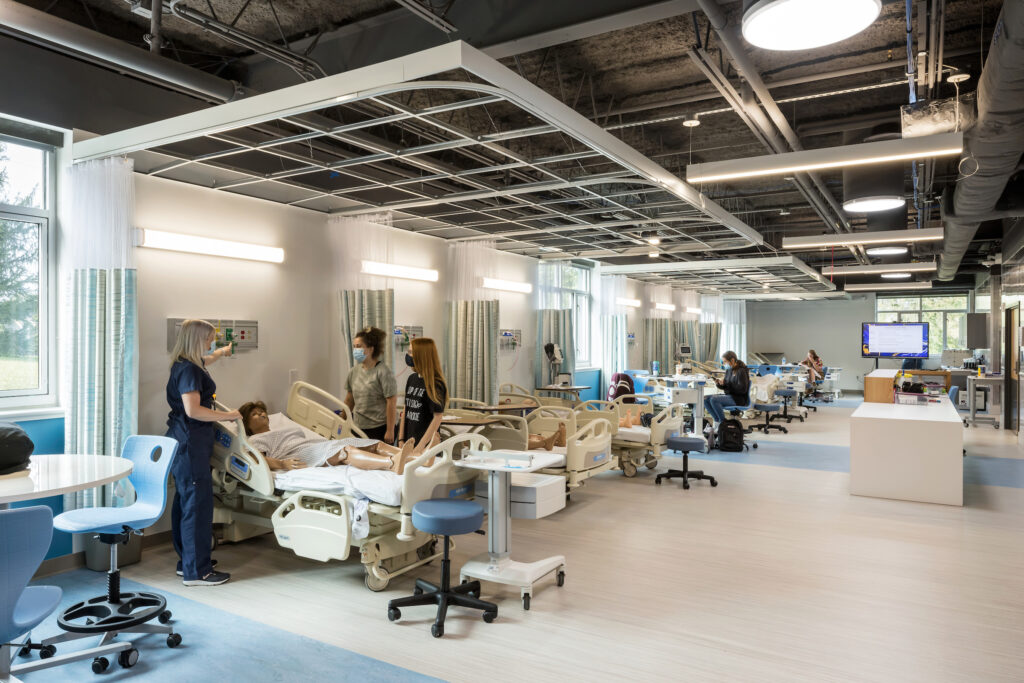
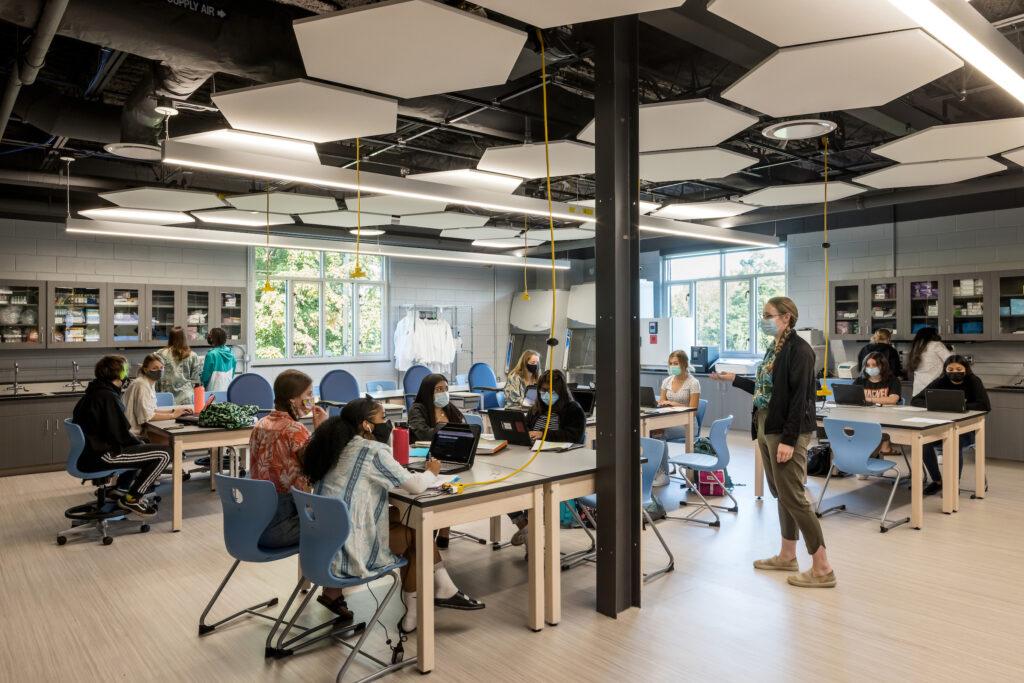
A Community Resource Reimagined
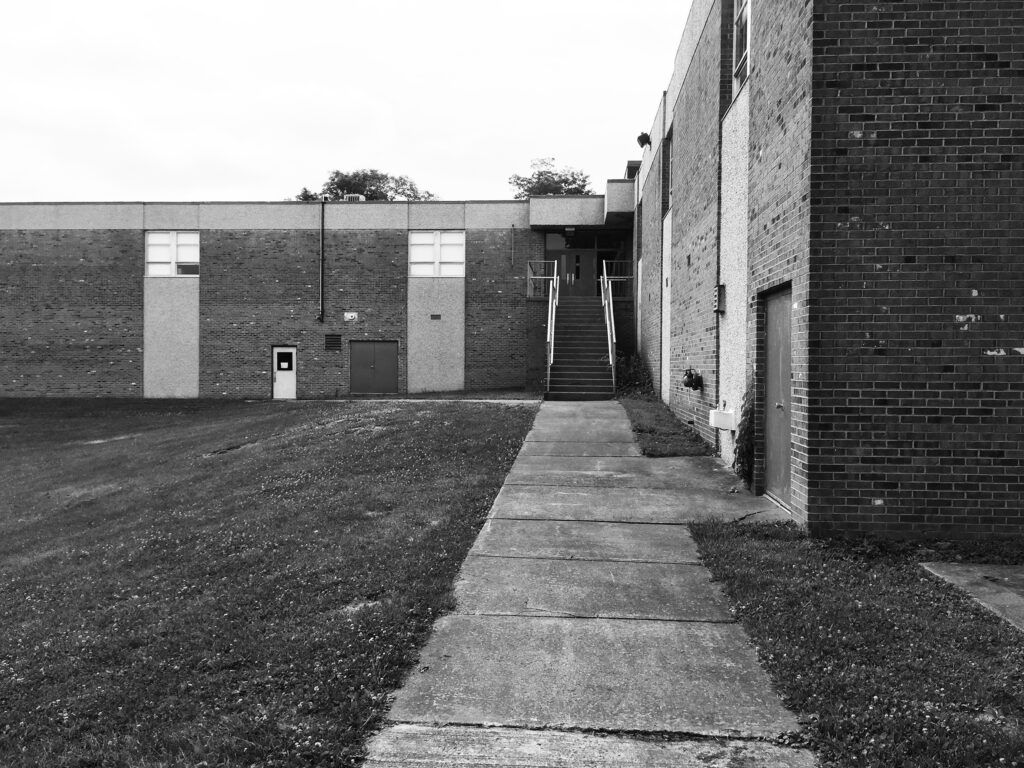
The Center is also a testament to what can happen when a community invests in transforming an existing resource. Don’t all districts have underperforming facilities, even classrooms can be retrofit? Once an underutilized elementary school, the building now serves as a region-wide hub for innovation thanks to strong partnerships among the school district, private donors, state agencies, and industry collaborators. Students from John Handley High School have daily access to environments that blend academic learning with technical expertise, while adult learners participate through a partnership with Laurel Ridge Community College. Local employers engage with students in meaningful ways, creating a direct link between education and workforce needs.
Designing for the Future Workforce
The need to integrate advanced technologies into K-12, higher education institutions, and our communities is clear. As workforce development continues to be a key priority for educators, industry leaders, and policymakers, the role of architecture is pivotal in shaping environments that foster learning and innovation.
At VMDO Architects, the future of education lies in creating flexible, adaptable spaces that prepare students for the ever-evolving workforce. Whether through advanced manufacturing labs or hands-on infrastructure training spaces, we are committed to designing environments that empower the next generation of workers to succeed in their chosen fields. We’re committed to push the boundaries of educational design, ensuring that both K-12 and higher education institutions are equipped to meet the needs of students and the industries that will hire them.
If we can help educate and give people the chance to make good wages, and also give back to the community while we're doing it, what bigger win can there be?
A Model for What’s Possible
The Multiple Choice documentary highlights a powerful truth: when learning environments are intentionally designed, they can transform opportunities for students and strengthen communities. Winchester Public Schools’ vision, and the support of partners across the region, have made the Shihadeh Innovation Center a compelling example of this work.
VMDO is grateful to see the Center recognized and to continue supporting school districts that are redefining what learning can look like.
Statistics from: Community College Review | nccer.org | acteonline.org