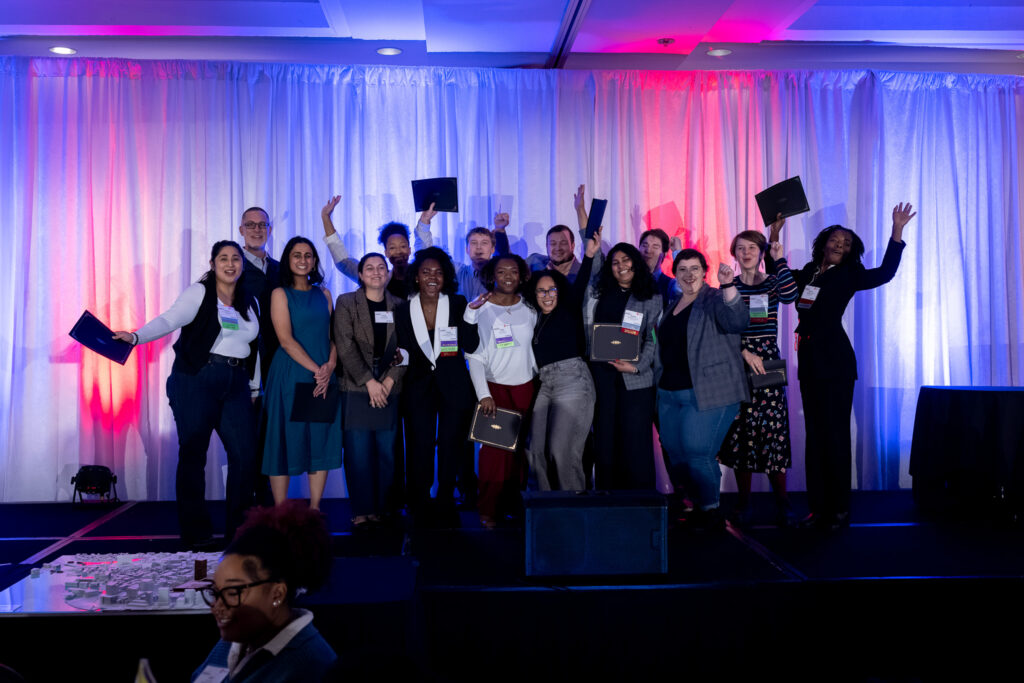
Over nine months, VMDO designers Bhargavi Murthy and Bianca Briscoe participated in the AIA Virginia Emerging Leaders in Architecture (ELA) program. Joining a cohort of 11 peers and local experts, they engaged in research and collaborated with local communities to develop flood resilience strategies for Norfolk, VA.
Impact Through Community & Advocacy
Q: What aspects of the program experience were particularly inspiring or impactful on your current professional practice? How so?
BM: The scale and urgency of the problem that we were tackling had the biggest impact on me. Studying and witnessing the disastrous effects of human-made infrastructure while standing in the shoes of the stakeholders who inherit that land will change your approach to planning and design on a philosophical level. You start to think more critically about what not to build, where not to build and how to be respectful of the agents that you’re dealing with. With our project, the idea of “letting in” the water as opposed to other proposed solutions that were trying to “keep out” the water was a key philosophical approach. The other deeply impactful aspect was slowly reconciling with the fact that there are no umbrella solutions—some groups will always benefit more than others, and the best you can do as a designer is to be open-minded and willing to learn.
BB: There were a couple aspects of the program that have left a mark on how I see architecture as a journey of learning. The first one is how broad and diverse the idea of “emerging” can be. All 13 of us came from different cities across Virginia, most of us worked in completely different areas and positions within the industry. Additionally, we all also had very different levels of experience (a couple of people were managers!). It was both admirable and insightful that overall, we all sought to learn more and strive for personal development in the field. Secondly, despite our own positions involving different topics, we worked like a puzzle. Each one of us had something very interesting to contribute, and it was scarily fascinating that everyone had a different strength to give to the final product. Plus, we all spoke the same baseline language when it came to problem solving.
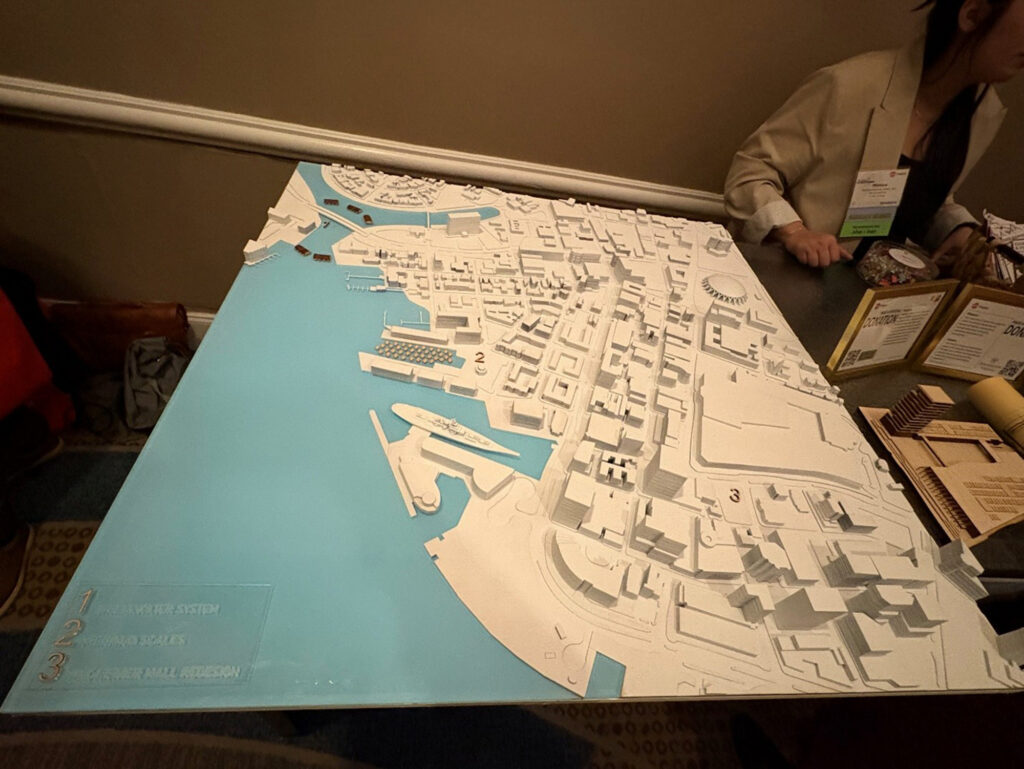
Model of the project site and its surroundings. Largely created and produced by Brendon Glover. Contributions by Andi Pretlow and Bianca Briscoe. + Enlarge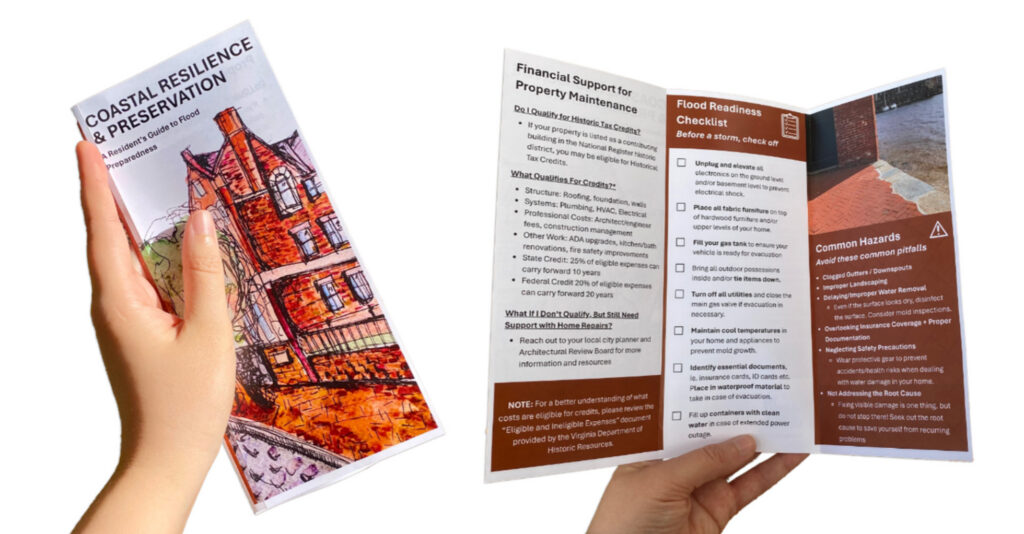
Pamphlet containing flood resilient related rips and resources, created by Andi Prelow and Aidan Brown. + Enlarge
Translating Insights into Architectural Practice
Q: How did working within your cohort over nine months shape your approach to teamwork and collaboration at VMDO?
BM: The goal of the final ELA project is to be able to tell a great story—all the research, community engagement and design that multiple authors work on needs to come together as a single cohesive story that our audiences, including stakeholders like activists, city officials and other designers, can appreciate. The nice part was that many of our peers were from firms with very different workflows and project delivery methods than VMDO, and everyone seemed to have distinct skills and areas of interest. The challenge was being able to coordinate our schedules and develop a good narrative and presentation style that would work for everyone.
BB: The teamwork aspect reassured me that conversation and discourse will lead to improving everyone, collectively. It was very valuable to hear the opinions of people in different fields and how they experience teams, organization, and management. Working together to find efficient solutions and convey them clearly was such valuable information that someone could take with them through the rest of their career. There’s so much to learn from so many people, and simultaneously it’s nice to express and reflect on how my experience has shaped my view and potentially brings something beneficial to the conversation.
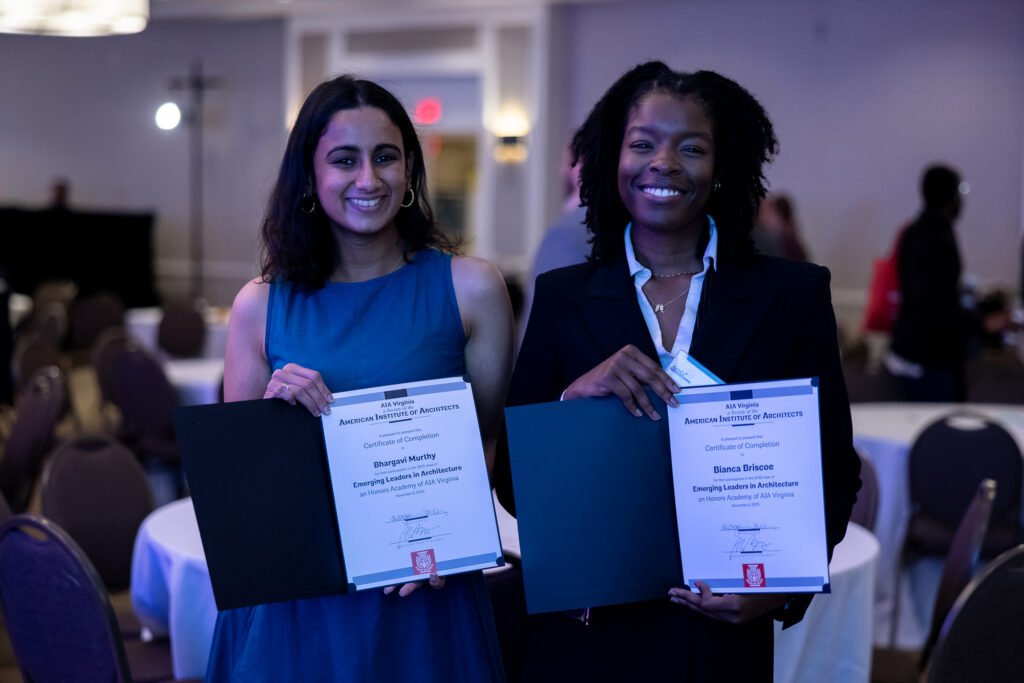
AIA Virginia’s Emerging Leaders in Architecture
Q: What advice would you give to your peers considering applying to the AIA Emerging Leaders in Architecture program?
BM: ELA is a great opportunity to work with people in disciplines that aren’t strictly architecture-adjacent—like marine scientists, storm-water engineers, activists and bureaucrats. I’d encourage peers to go beyond their comfort zone and learn as much as they can from these collaborators and advisors.
BB: My only advice would be to embrace the diversity of the program. Ask questions, make connections, and utilize your skills to reach that final product. You learn so much about yourself and how you contribute to a team effort, especially when there’s a chance everyone isn’t just an architectural designer. It’s such a worthwhile and informative experience, and the number of connections made will be very impactful in this big field.
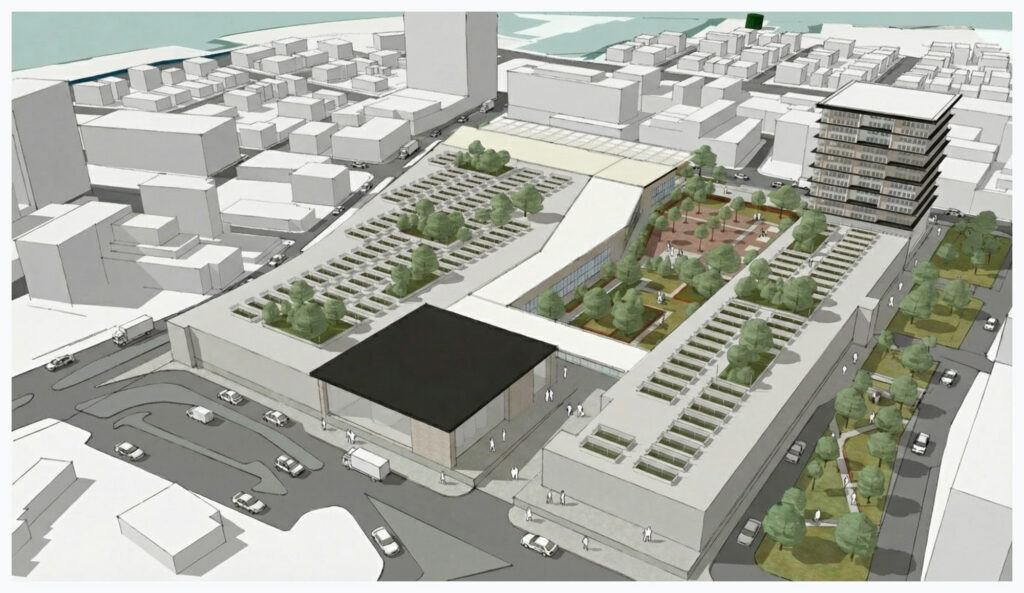
An aerial view of the proposed elevate complex in place of the MacArthur Mall with social, residential and commercial programming atop a large reservoir. Image courtesy of Bhargavi Murthy. + Enlarge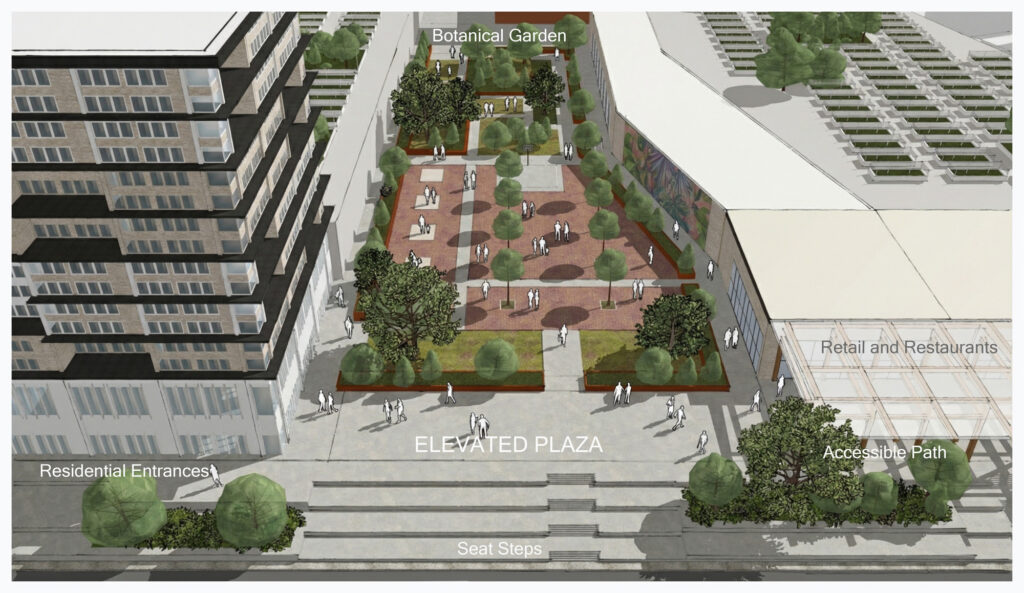
Aerial view of the proposed public plaza along Monticello Ave in Downtown Norfolk, intended to be a welcoming public space. Image courtesy of Bhargavi Murthy. + Enlarge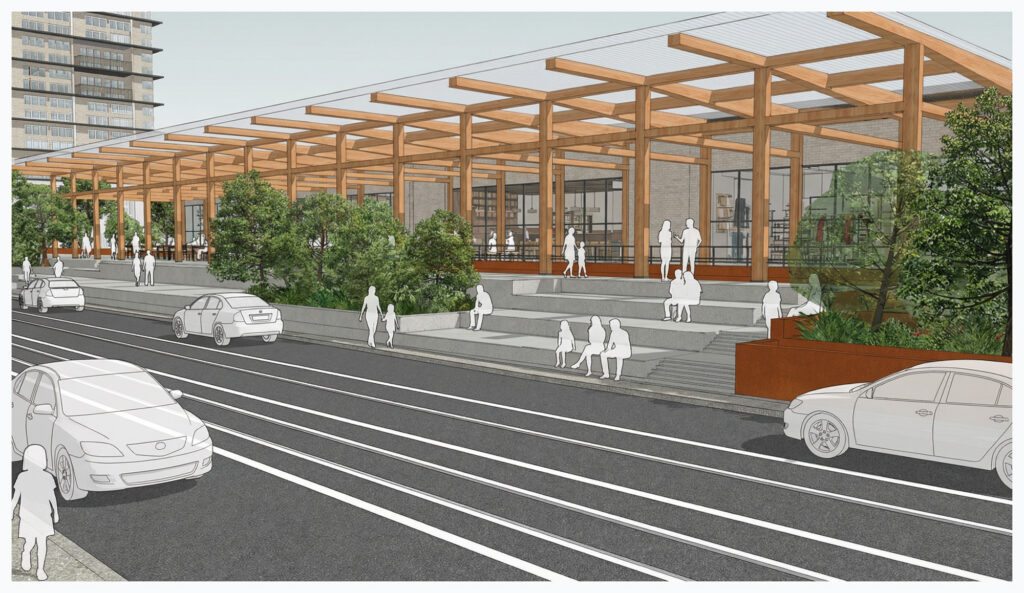
Street view of the proposed social steps along Monticello intended to active an urban zone in Downtown Norfolk that is now unwelcoming to pedestrians owing to the inward-looking nature of the MacArthur Mall. Image courtesy of Bhargavi Murthy. + Enlarge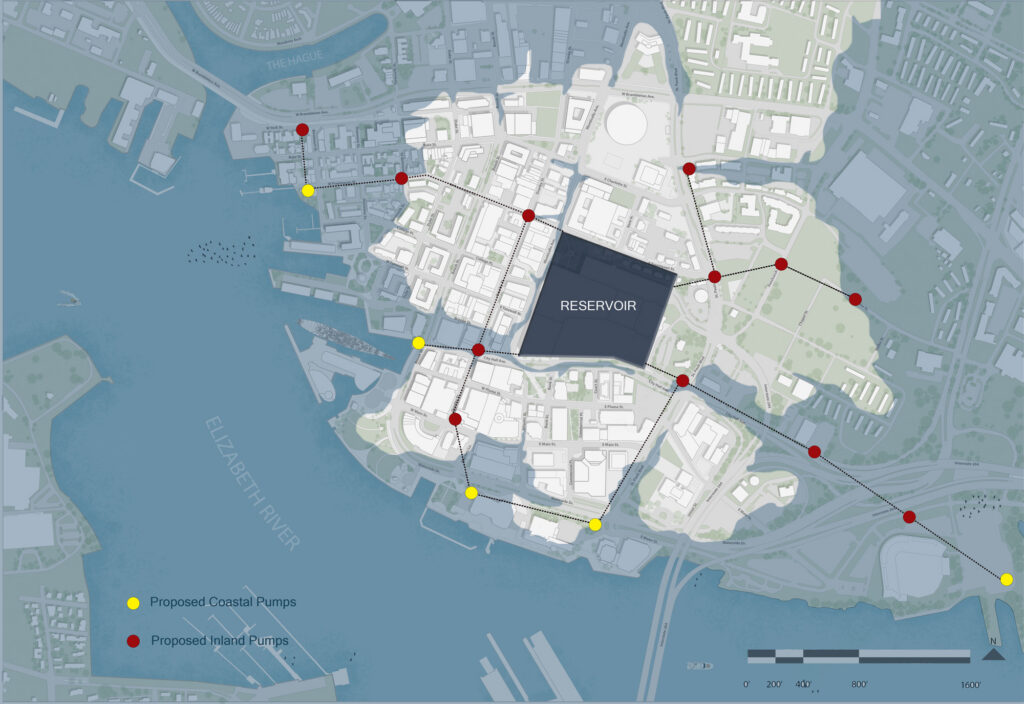
A map of Downtown Norfolk with the 100-year floodplain overlaid shows a network of coastal and inland pumps that could channel floodwater towards a large inland reservoir on the site of the MacArthur Mall. Image courtesy of Bhargavi Murthy and Bianca Briscoe. + Enlarge