In an era when AI can conjure images in seconds and misinformation can spread in minutes, the role of clear, honest visualization in architecture is more important than ever.
Common Edge’s recent article explores this shifting landscape – asking what a Director of Visualization does today, and why it matters in an age when digital tools can make anything look real, whether it is or not.
At VMDO, we believe the true value of visualization lies not just in what’s drawn, but in how – and why – it’s shared. It’s a craft rooted in listening and trust. The lines we draw, the models we build, and the renderings we shape are invitations for dialogue. They help people see what’s possible, ask better questions, and imagine themselves inside spaces that don’t exist yet.
“In a world of easy, limitless imagery, we’re here to make sure what we share is rooted in truth – and truly serves our clients and communities,” says Thomas, Director of Visualization at VMDO. “Good visualization isn’t about perfect pictures. It’s about creating images that start conversations and make room for people to shape the story with us.”
This philosophy is woven into every project we design. From early hand sketches pinned up in workshops to immersive virtual walkthroughs that bring students, teachers, and families into the heart of a new school, our goal is to make the design process accessible and collaborative.
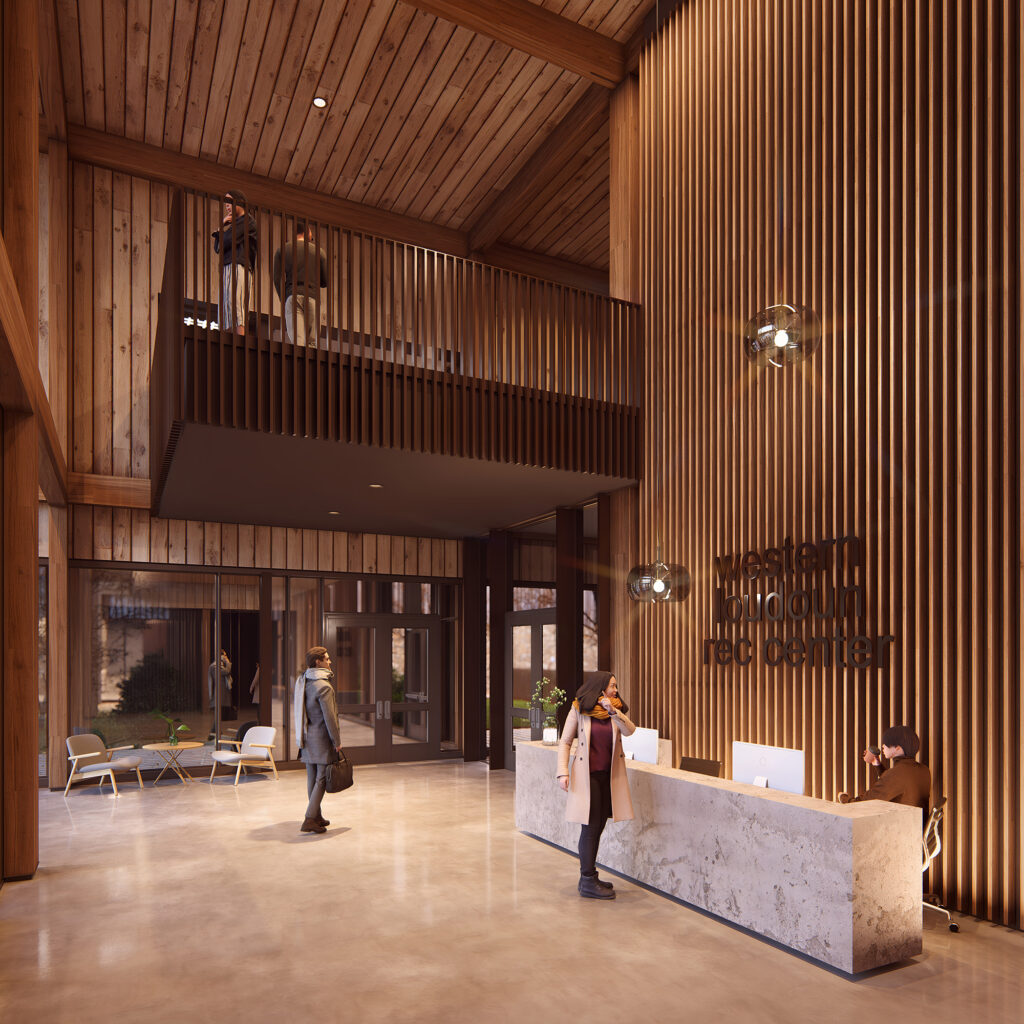
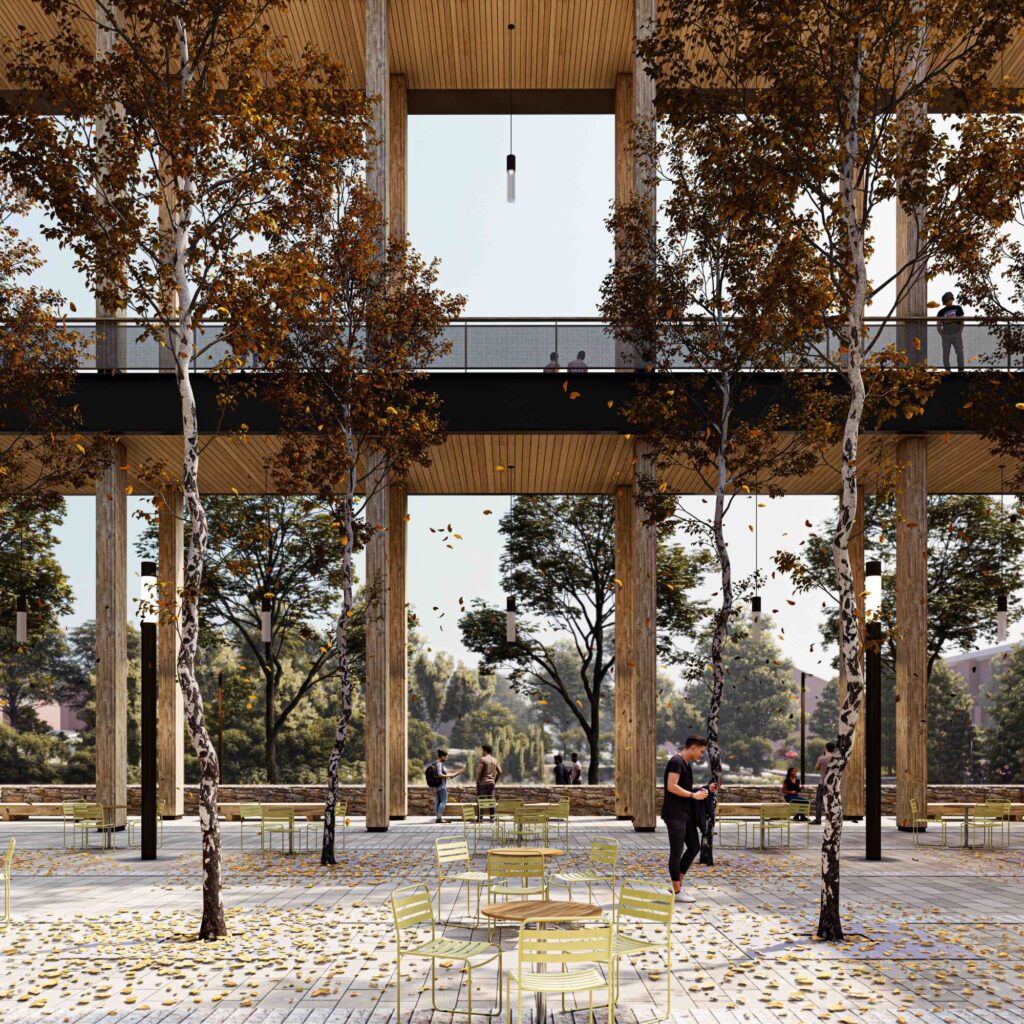
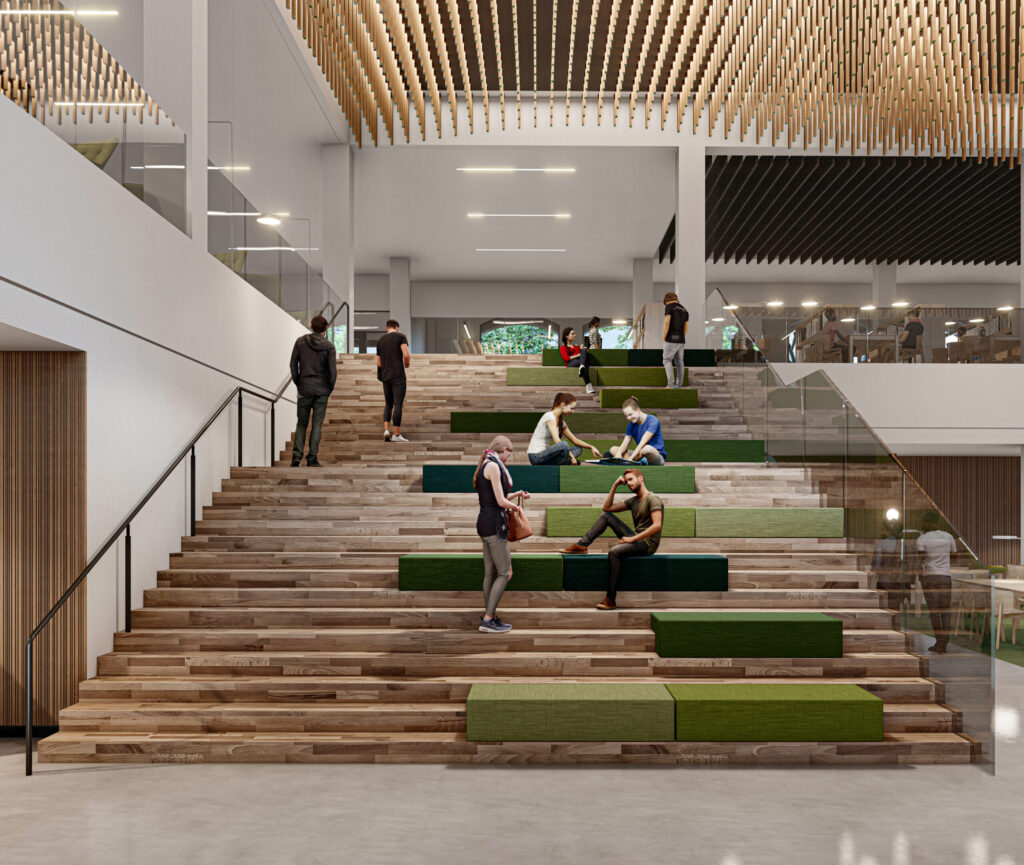
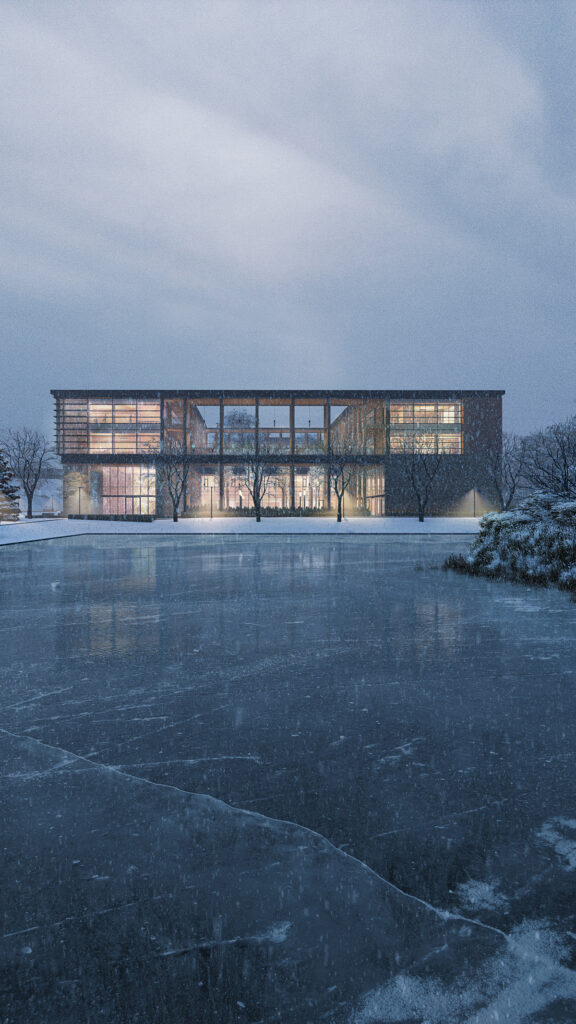
In our work on project, layered visualization helped bring community voices into the fold. Hand-drawn site plans revealed how a campus could open up to neighbors. Detailed interior renderings helped future students see themselves learning and playing there. Physical models invited touch and exploration — helping community members of all ages understand scale, flow, and light in ways that 2D drawings alone can’t convey.
While AI tools hold promise, they also demand caution. When images can be generated in seconds, the temptation is to replace nuance with speed. But at VMDO, we believe speed should never replace story. Each drawing, rendering, or animation is grounded in design intent, real context, and real input from the people we serve.