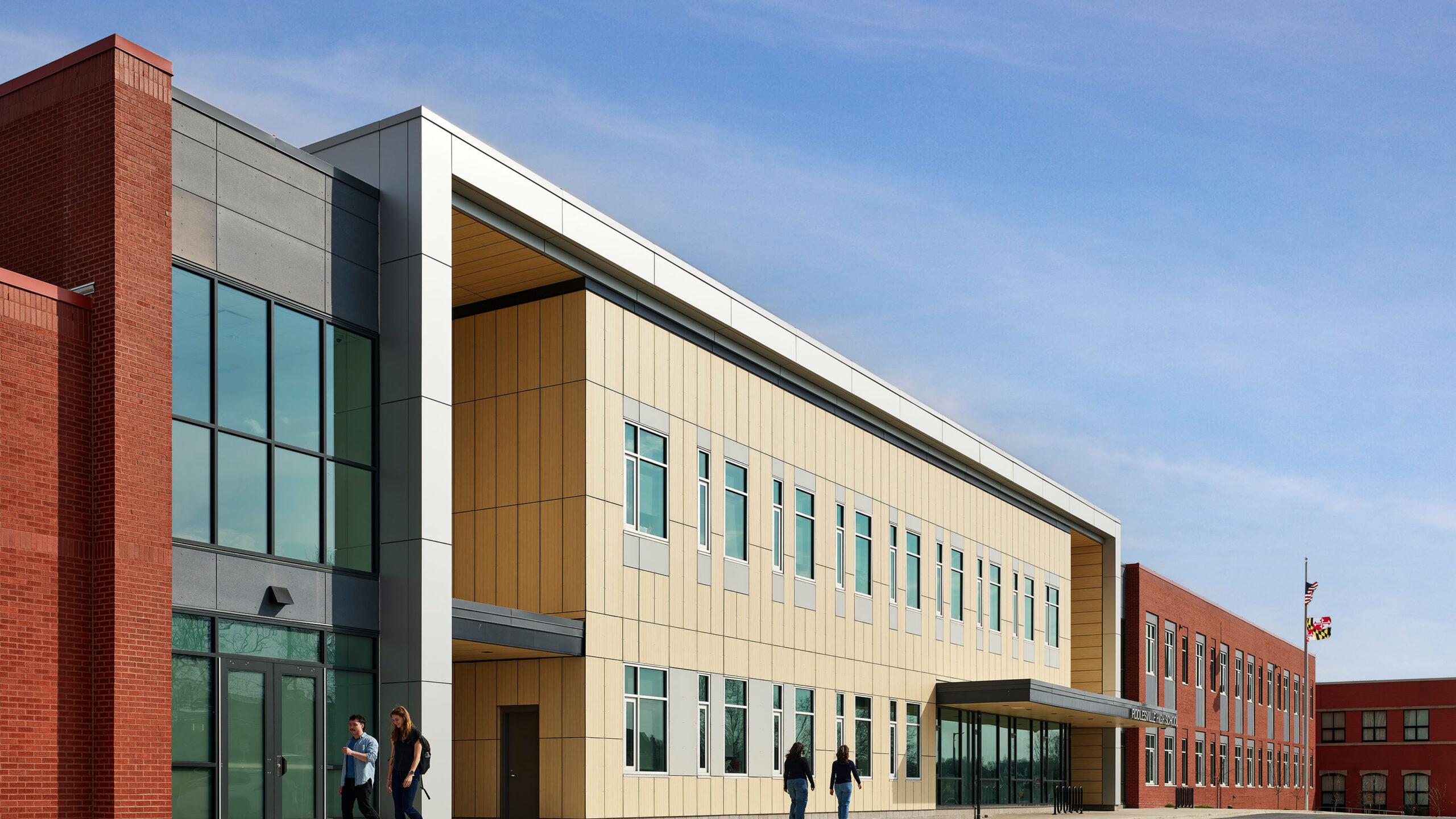
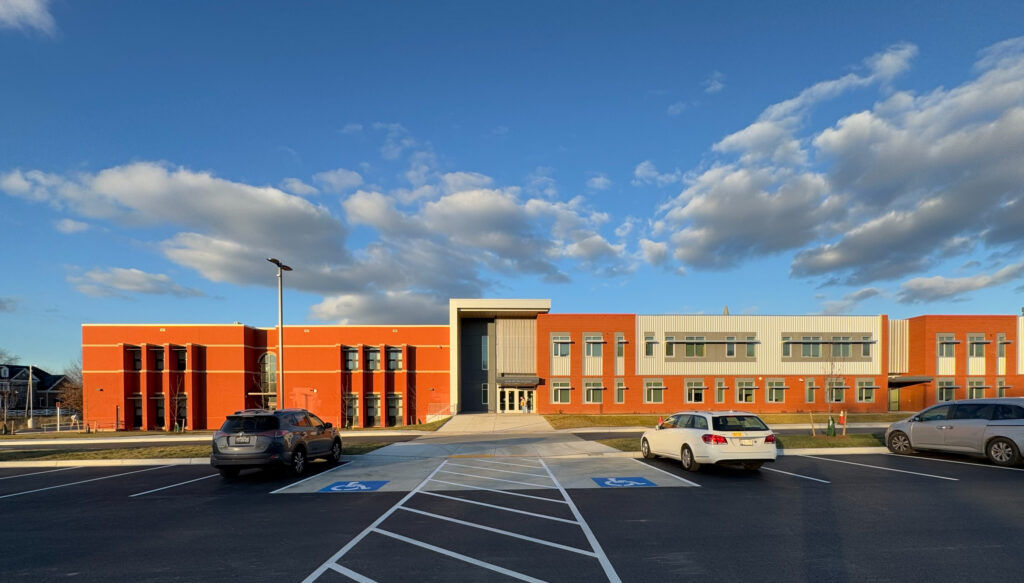
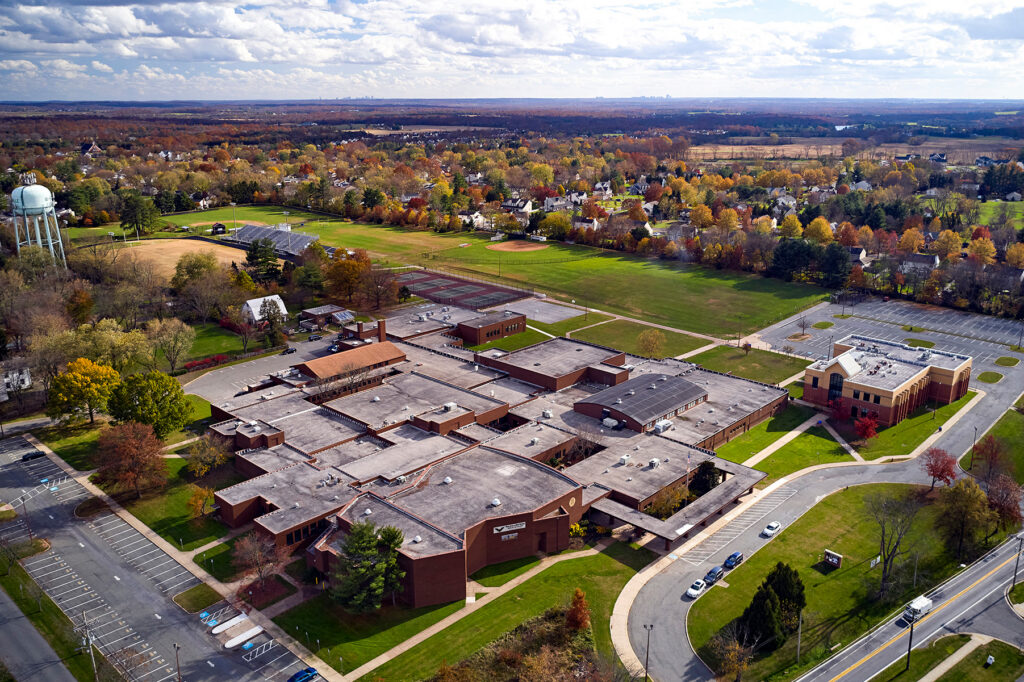
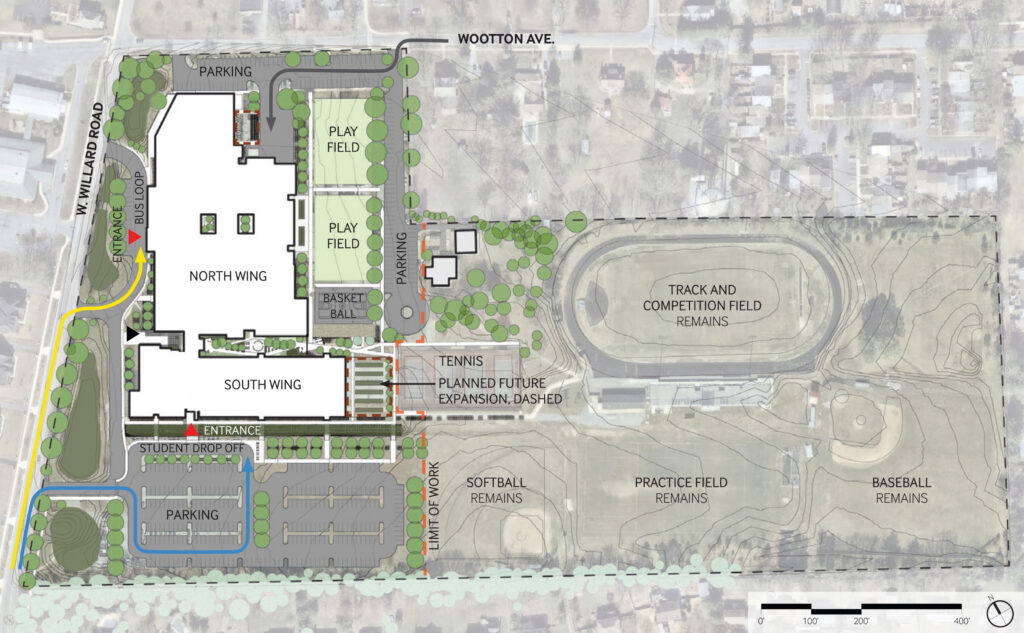
A top ranked high school in Maryland, the existing Poolesville High School campus was built out over multiple phases beginning in 1951. The result is an outdated and confusing complex of buildings ill-suited for the school’s progressive hybrid magnet programs. The modernization consists of a multi-phase renovation and addition project that transforms the campus, updates the school’s identity, and aligns learning environments with the school’s pedagogy.
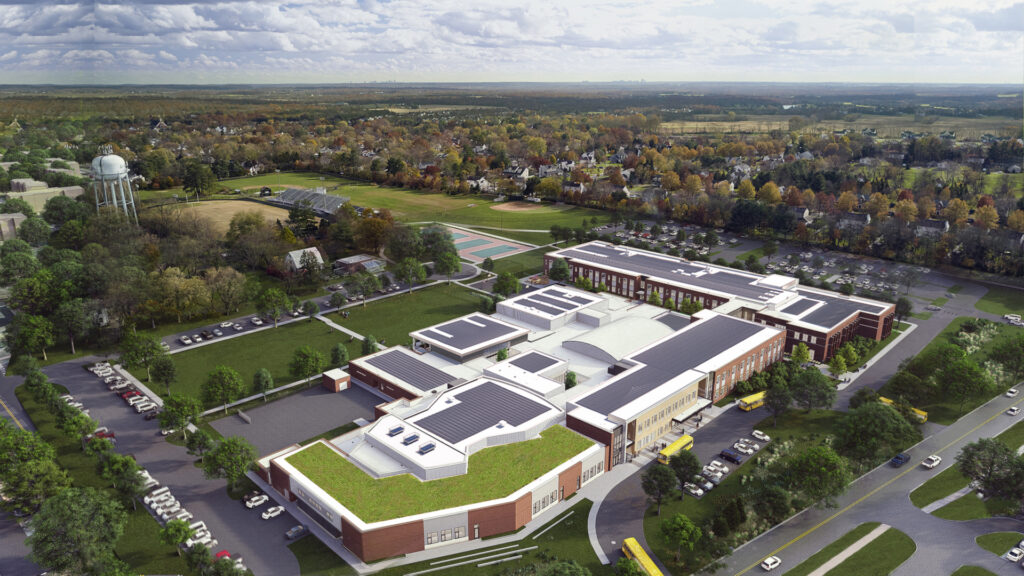
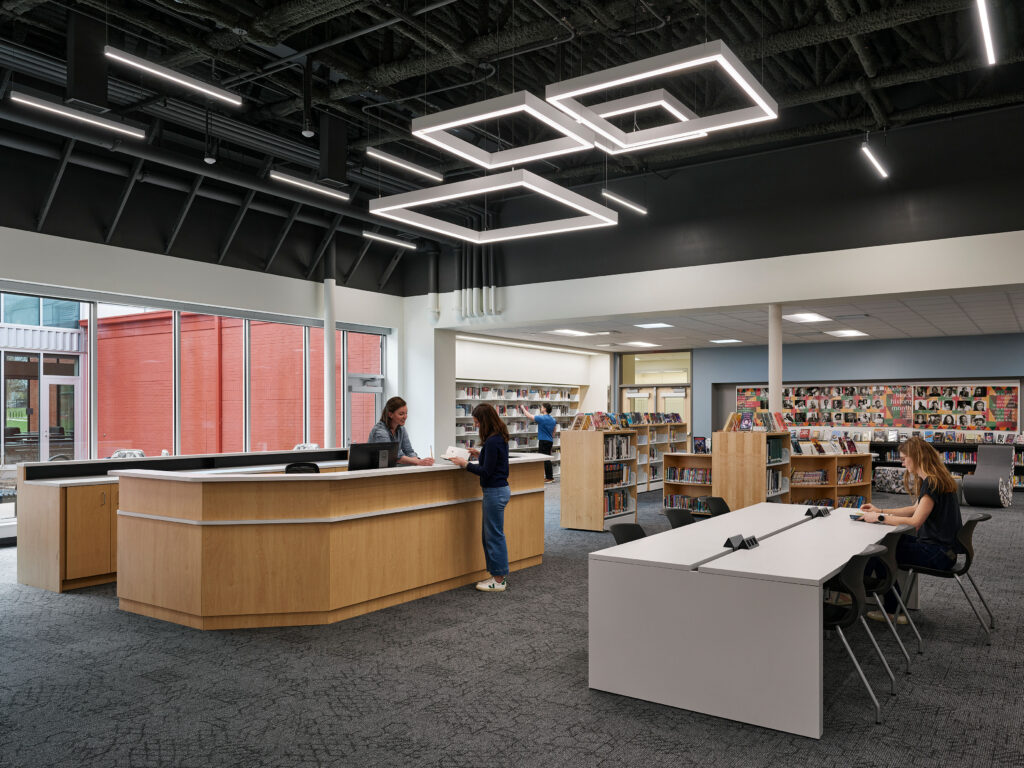
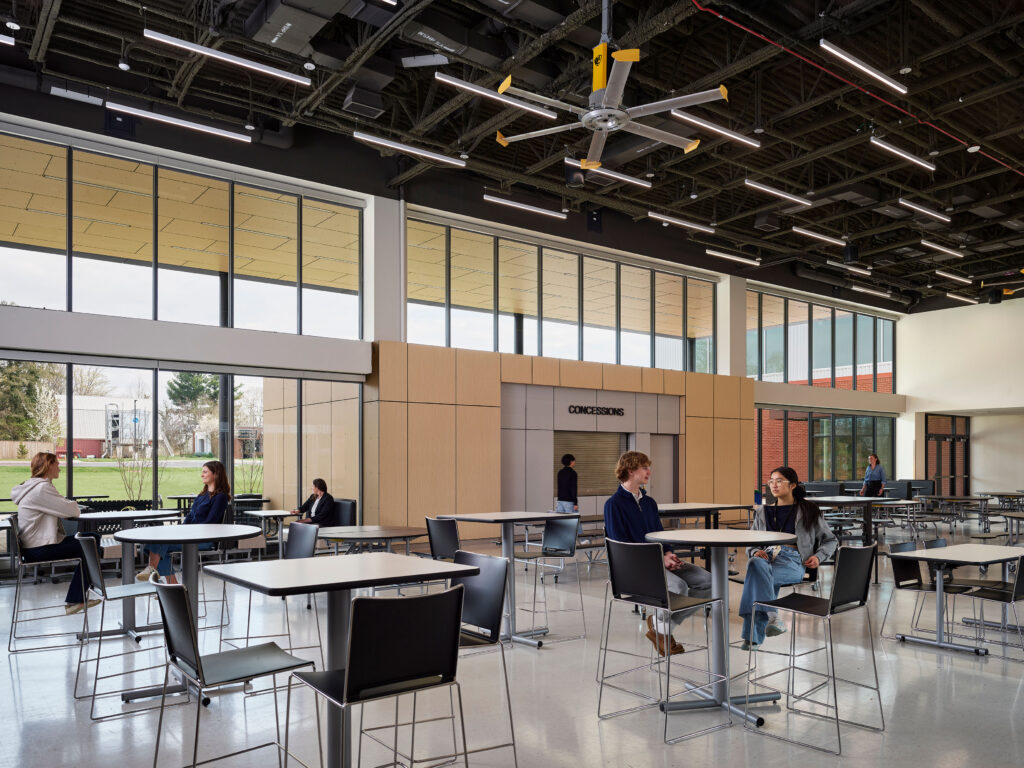
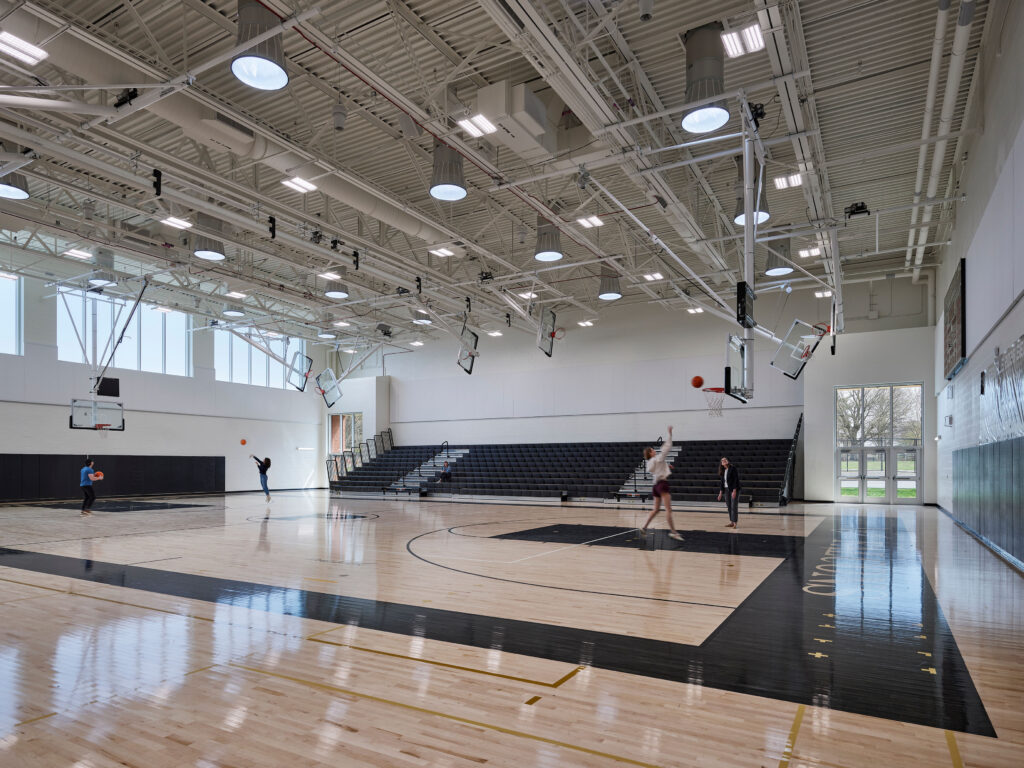
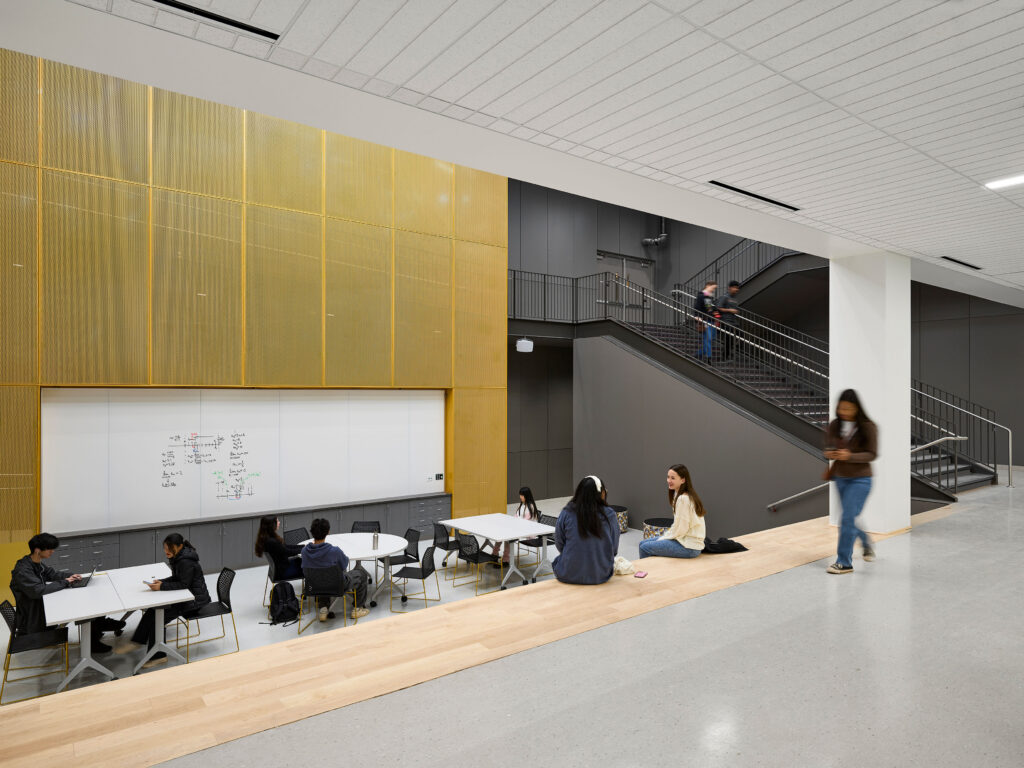
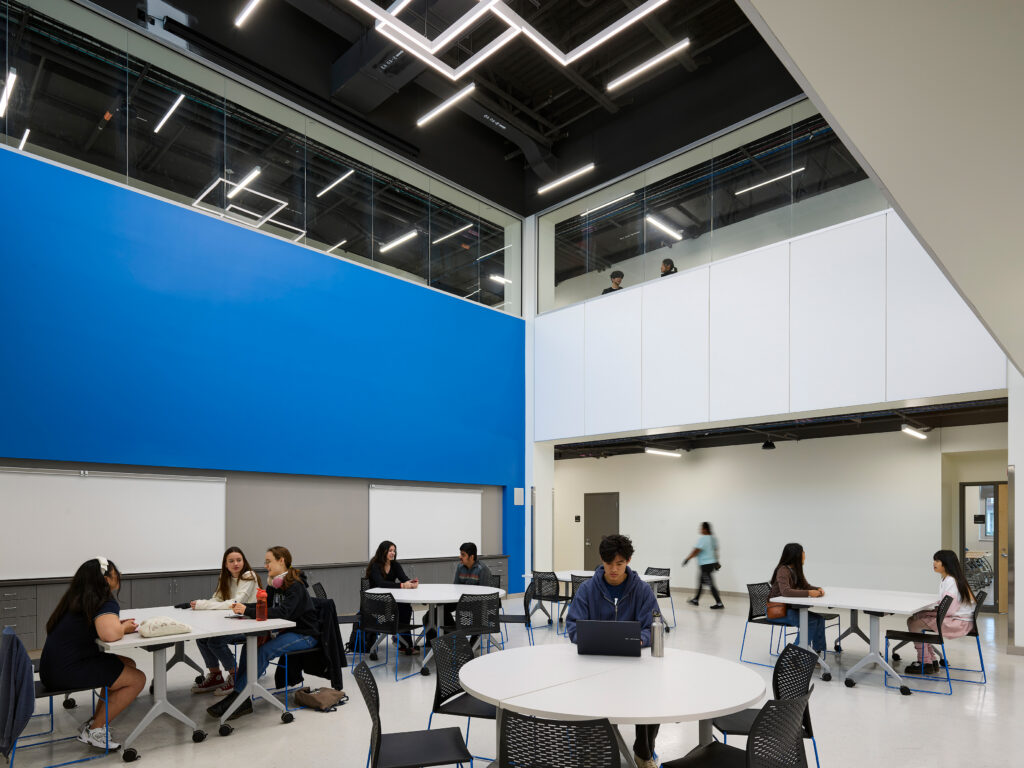
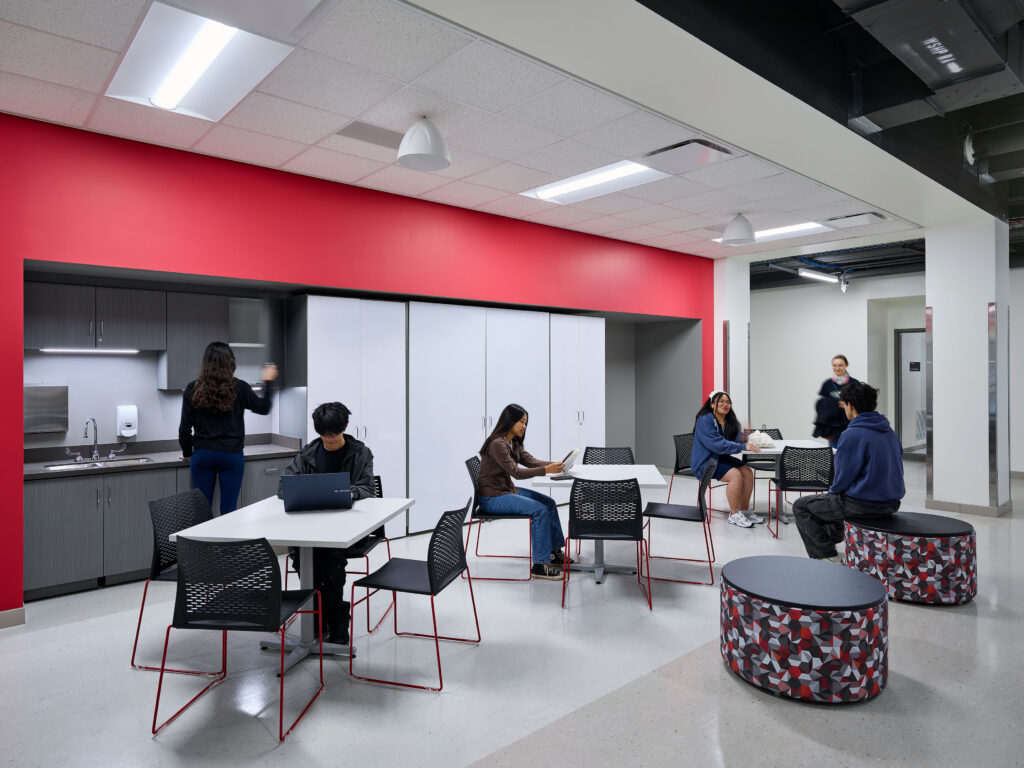
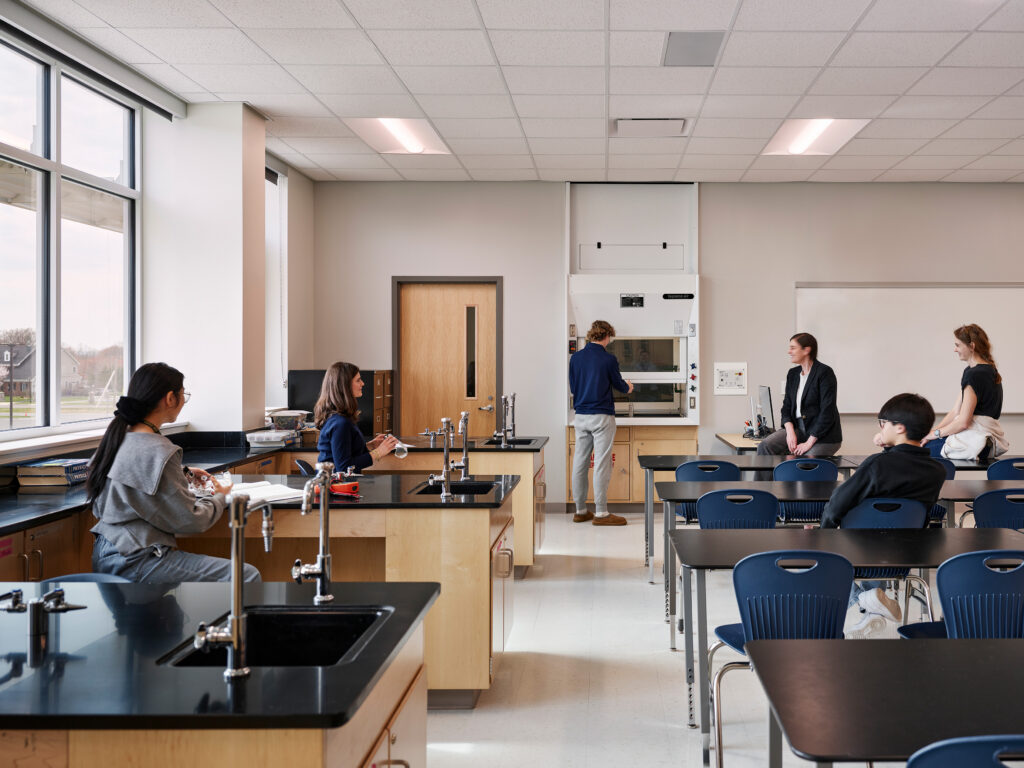
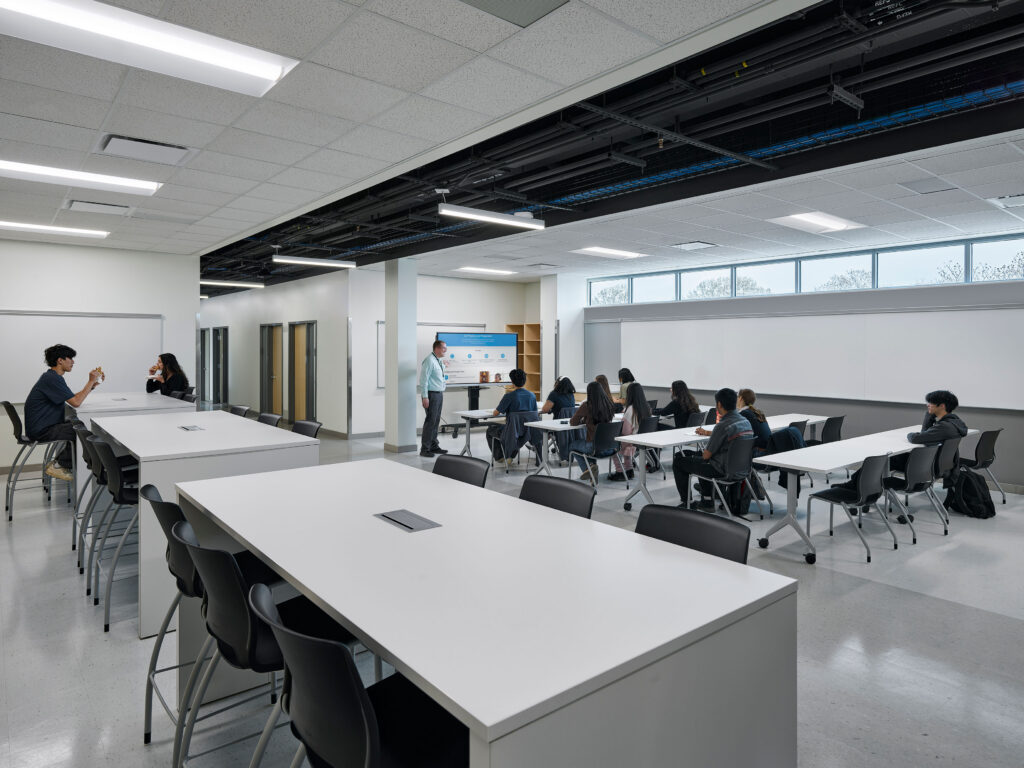
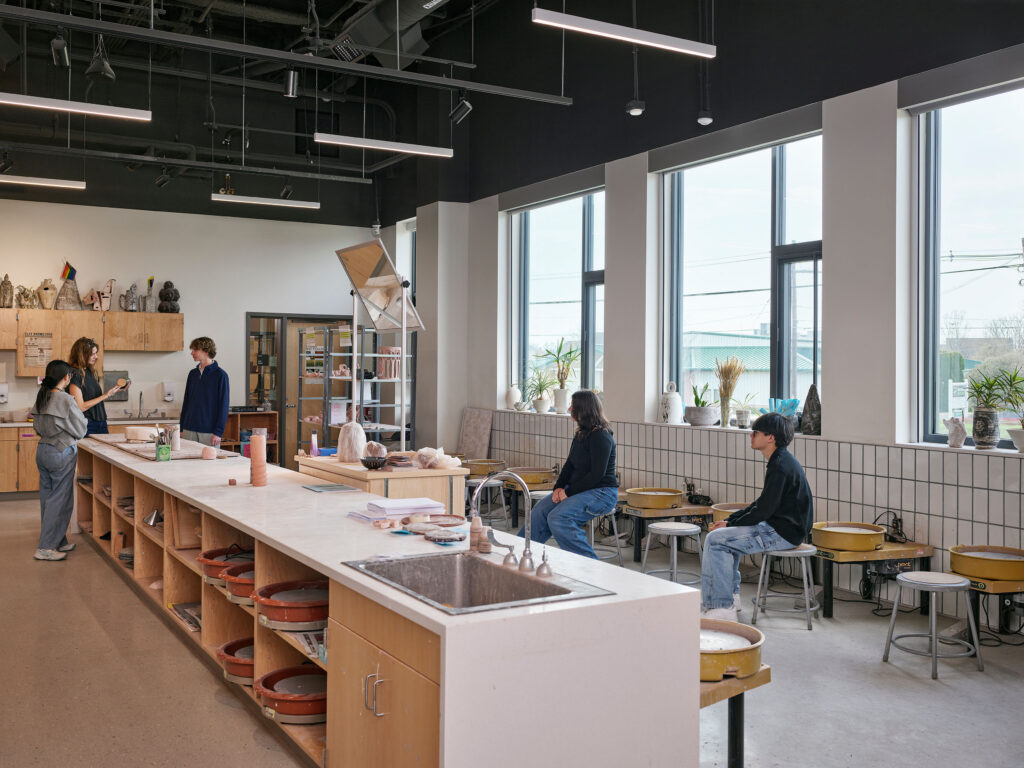
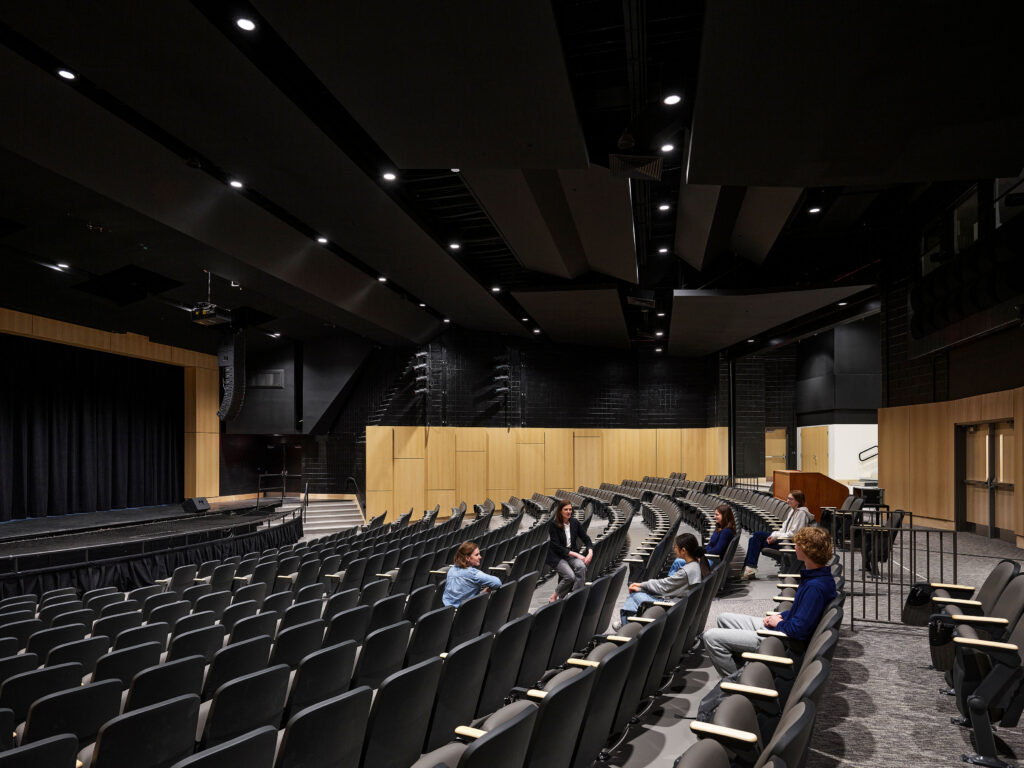
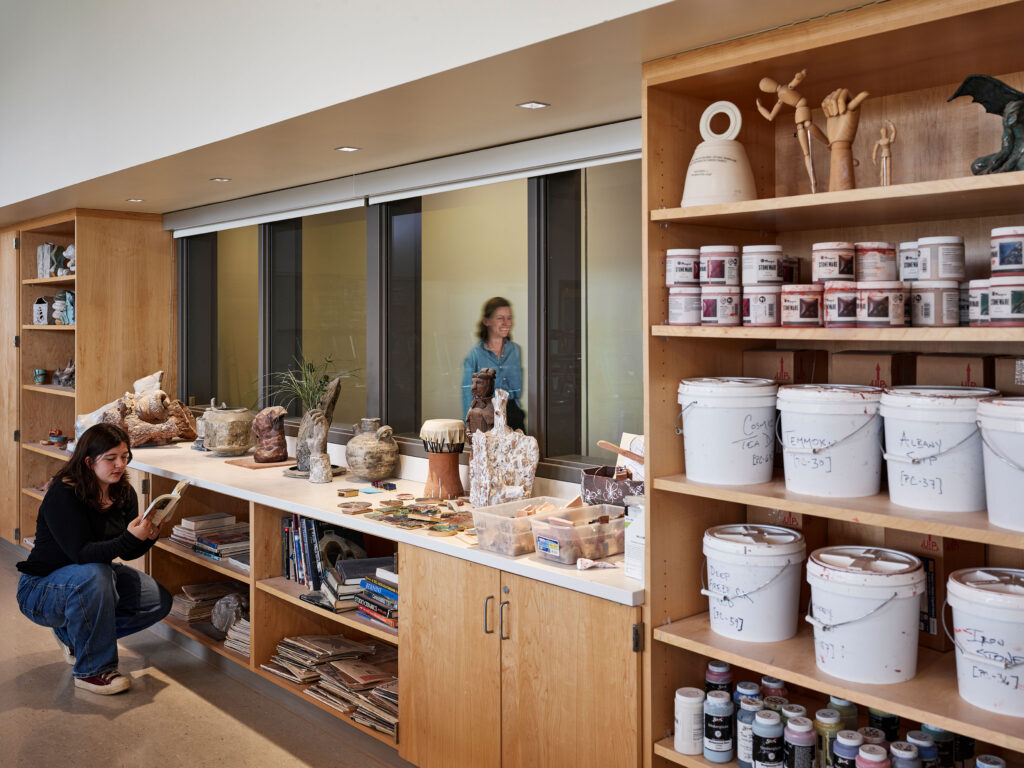
The proposed building is designed to meet MCPS educational specifications for 1500 students, with planned additions and core spaces for 300 additional students. The design makes effective use of existing space, preserving the science annex built in 2009 and renovating large-volume spaces. These existing structures are integrated into a design that accommodates new programs, improves security, maximizes building performance, and enhances occupant well-being. Learning communities are arranged on two levels around hubs – flexible use areas for instruction, collaboration, and distributed dining. These provide a “home base” for each of the school’s four “Houses,” and draw daylight deep into the center of the building. Around the hubs, a variety of flexible classroom and laboratory spaces are equipped to support current needs and adapt to evolving programs.
The design includes many opportunities for outdoor learning and recreation, including furnished courtyards, a covered dining terrace, and a detached greenhouse. The design is targeting 2 Globes under Green Globes Building Certification and will help Montgomery County achieve aspirational emissions reductions targets as a Net-Zero Energy ready building.
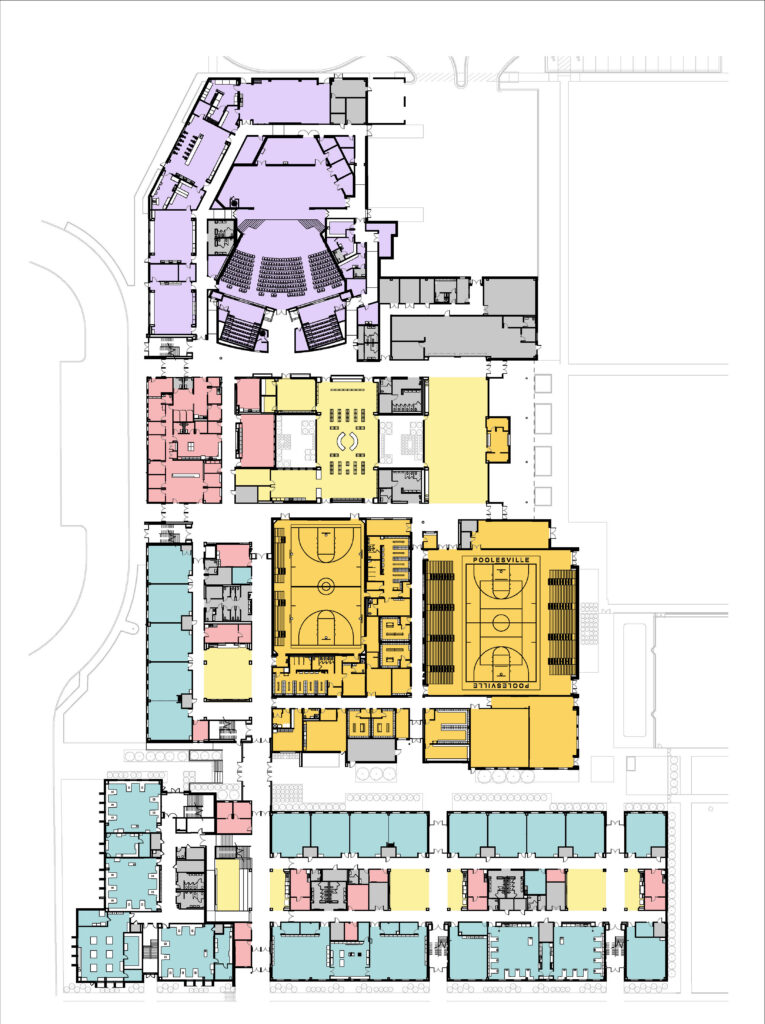
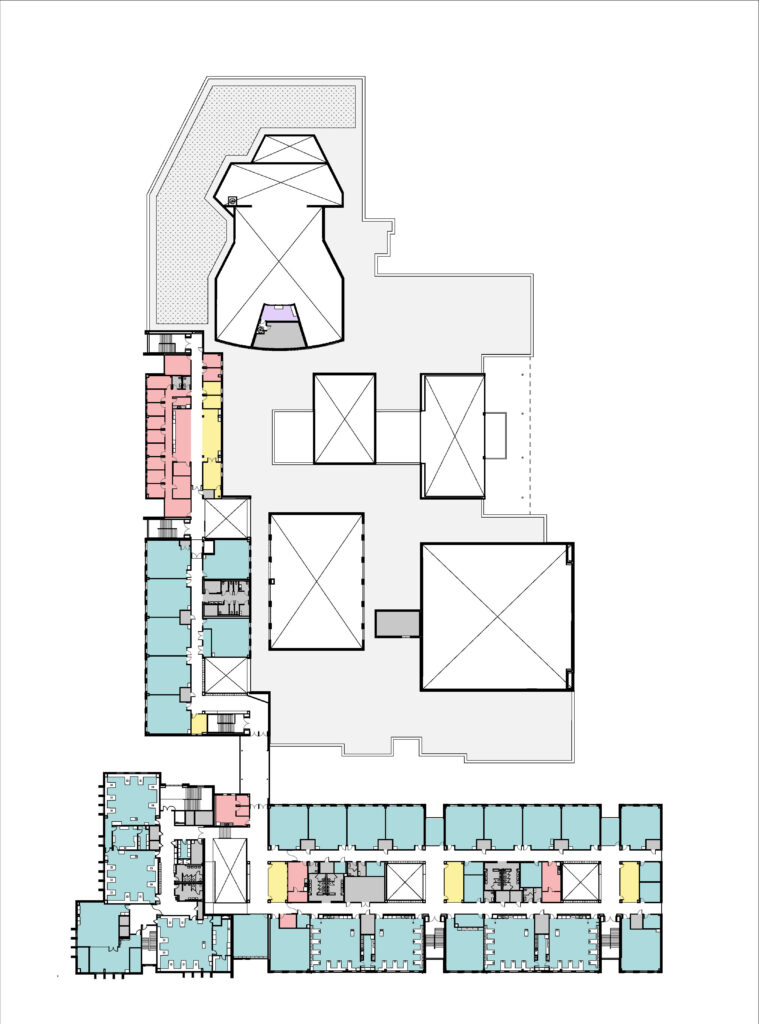
Collaborators
MEP Engineering: CMTA
Structural Engineering: Silman
Civil Engineering: Adtek Engineers
Landscape Architecture: JJM Design
Environmental Graphic Design + Wayfinding: Iconograph
Contractor: Dustin Construction, Inc.
Project Photography: Tom Holdsworth
Additional Drawings
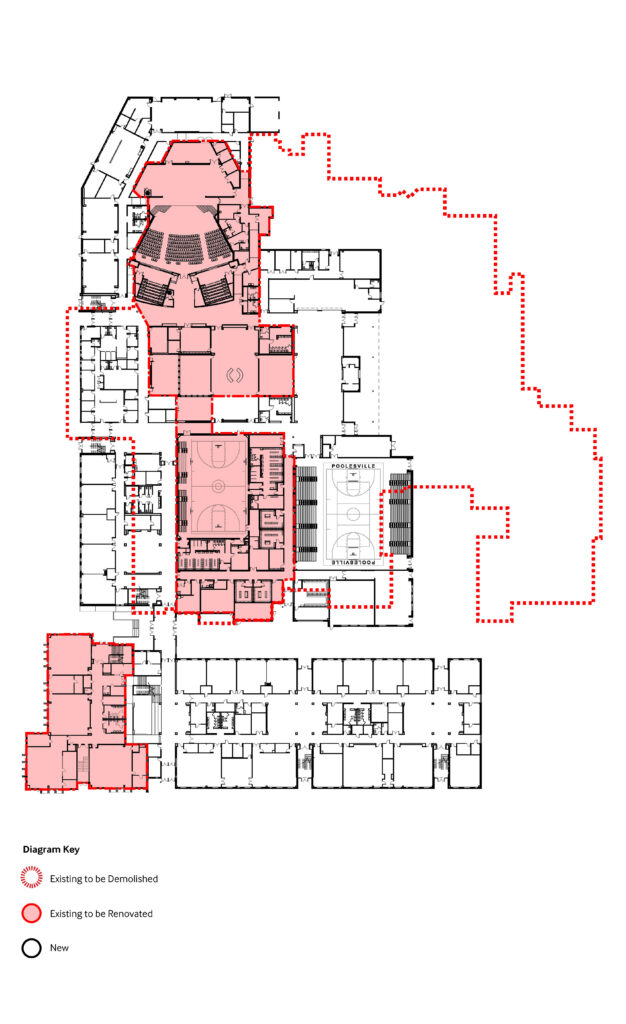
Phasing Diagram
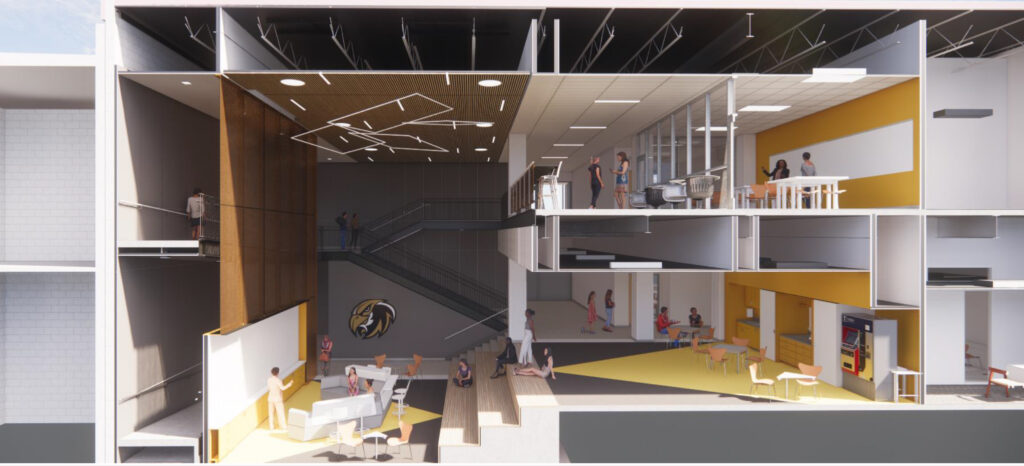
Knuckle Hub Section
Sustainability
Despite the project’s complexity and inherent challenges of a large-scale, aging facility, the design has helped Montgomery County overcome obstacles and achieve aspirational emissions reductions as a Net-Zero Energy ready building. In addition to upholding recent Maryland legislation around Building Energy Performance Standards (BEPS), the school is also targeting 2 Globes under the Green Globes Building Certification program.
- Energy / Emissions : Dedicated outdoor air system + demand controlled ventilation; heat pumps for heating/cooling/hot water; energy recovery: embodied/Local + recycled content specifications; building reuse; low GWP refrigerants
- Health: Daylighting + views; operable windows; design maximum CO2 levels < 900 ppm; improved filtration; low emitting materials
- Resilience: Water efficient design; on-site stormwater treatment; vegetated roof
- Biodiversity: Native species; light pollution reduction, irrigation free landscape; green infrastructure
- Equity + Community: Reduced urban heat island effect; supply chain transparency; single-user toilets; user control