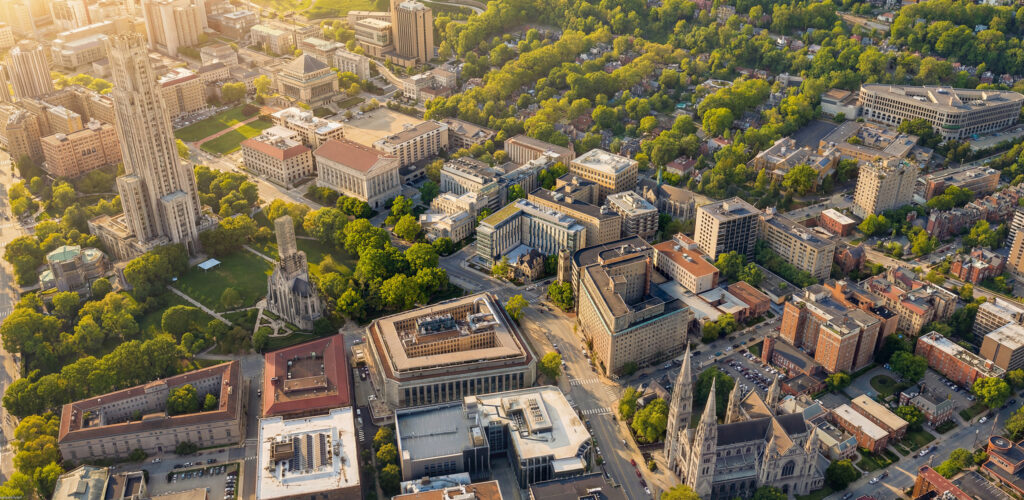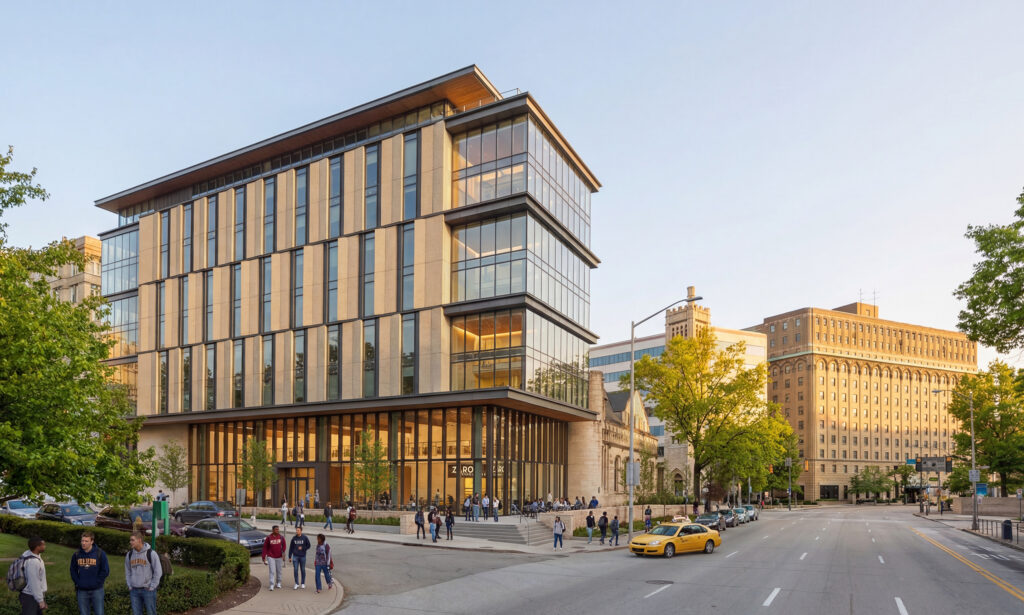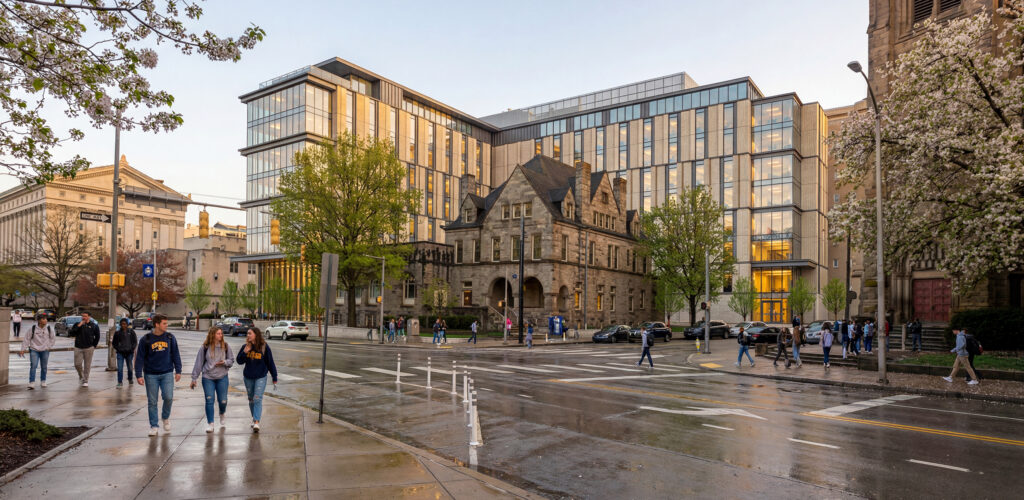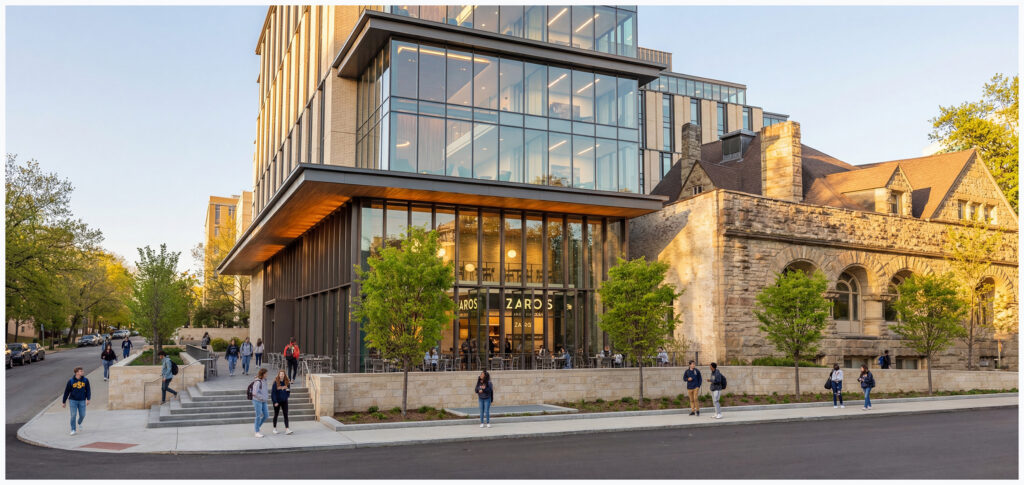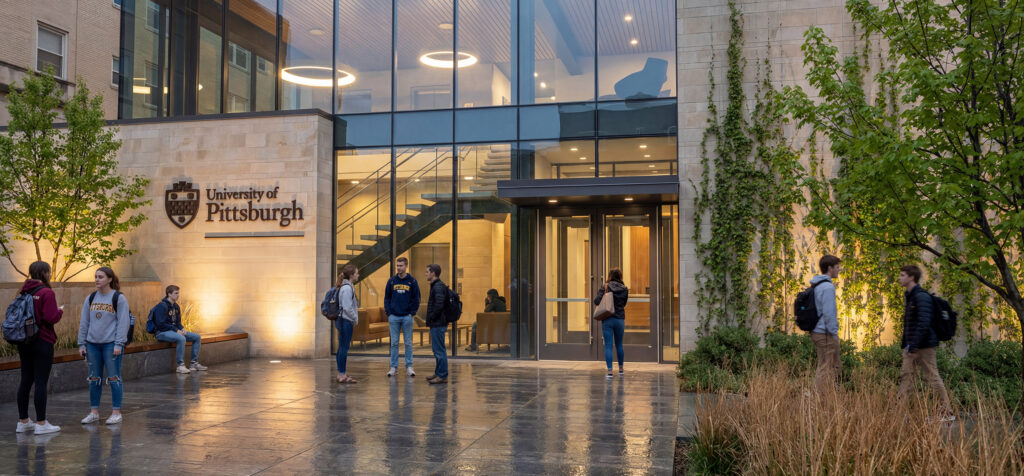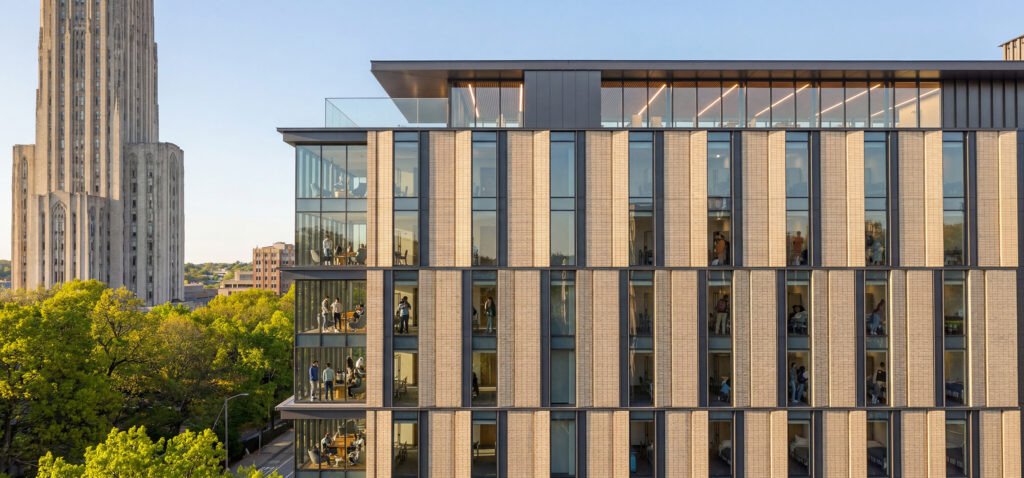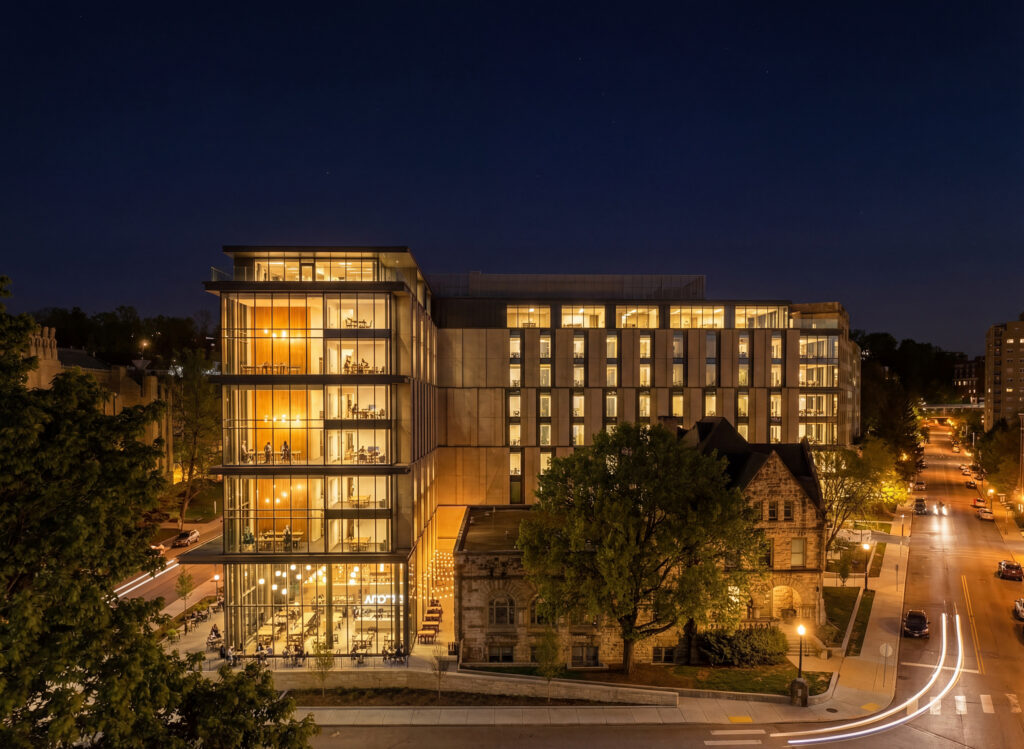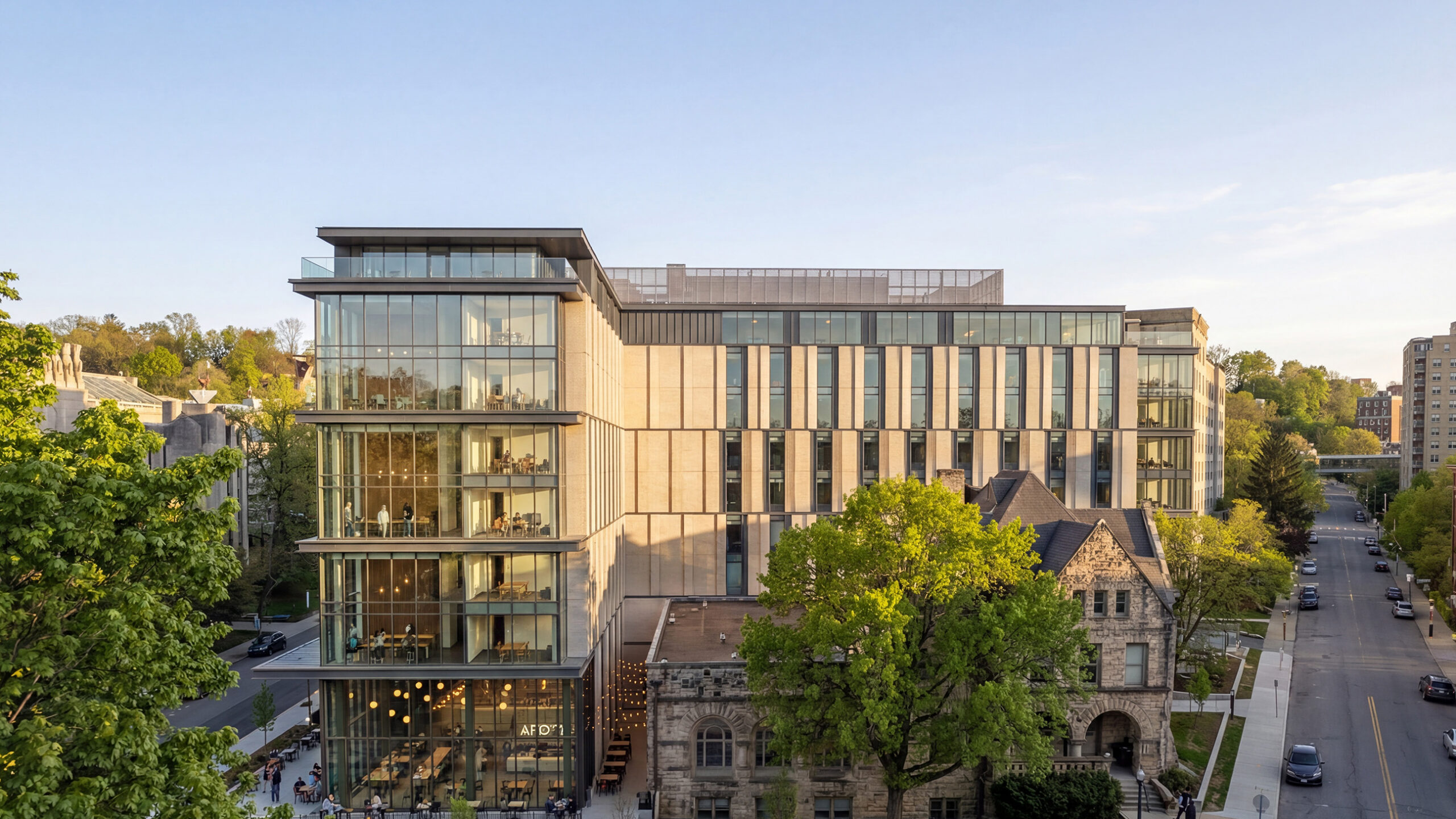
The University of Pittsburgh’s First Year Student Residence Hall represents a transformational investment in the student experience and the future of campus life. The project establishes a new eastern gateway to Pitt while reinforcing the architectural and cultural legacy of the Oakland Civic Center Historic District. Surrounded by iconic civic and academic landmarks including the Cathedral of Learning, Heinz Chapel, Mellon Institute, and the historic Music Building, the residence hall is designed to both respect and advance the identity of the university.
Developed through a design-build partnership between PJ Dick, Kimmel Architecture and VMDO Architects, the project rethinks first-year housing as a holistic living-learning environment centered on wellness, belonging, and student success.
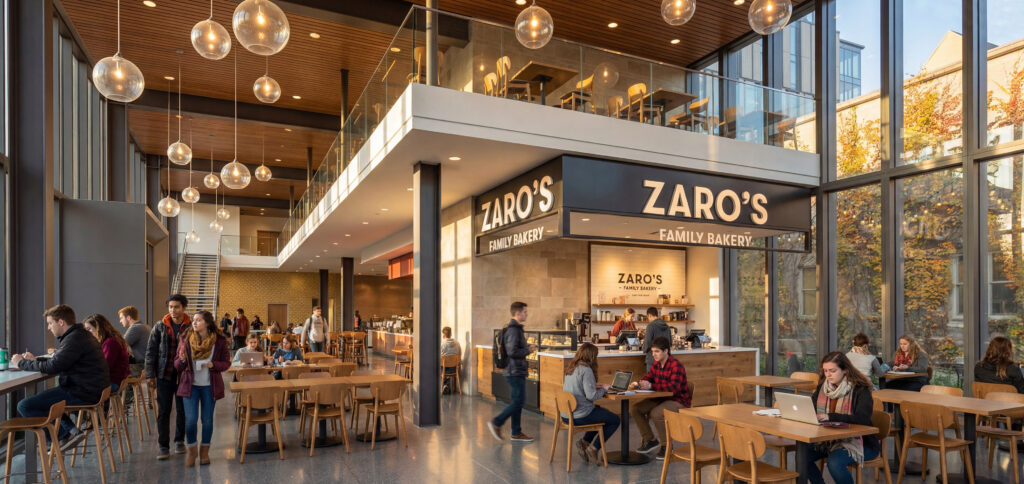
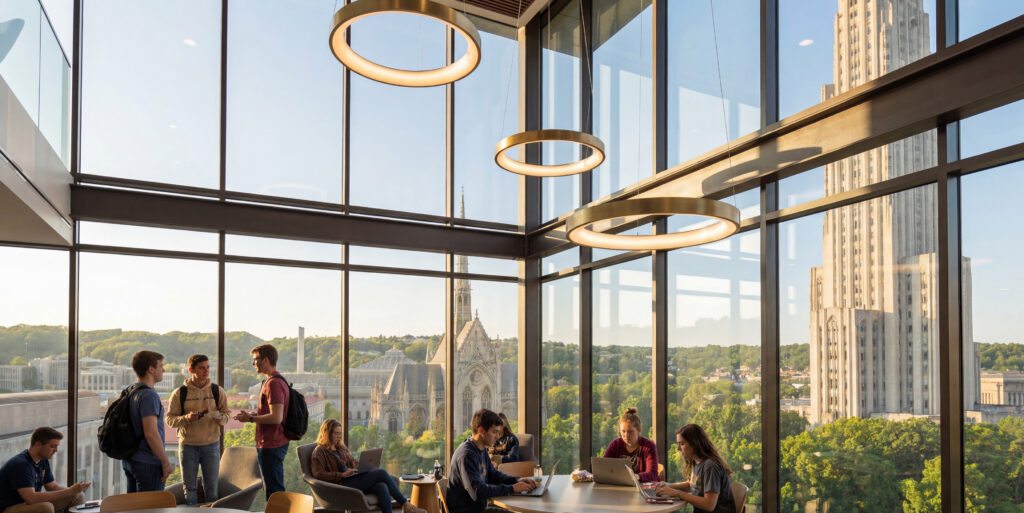
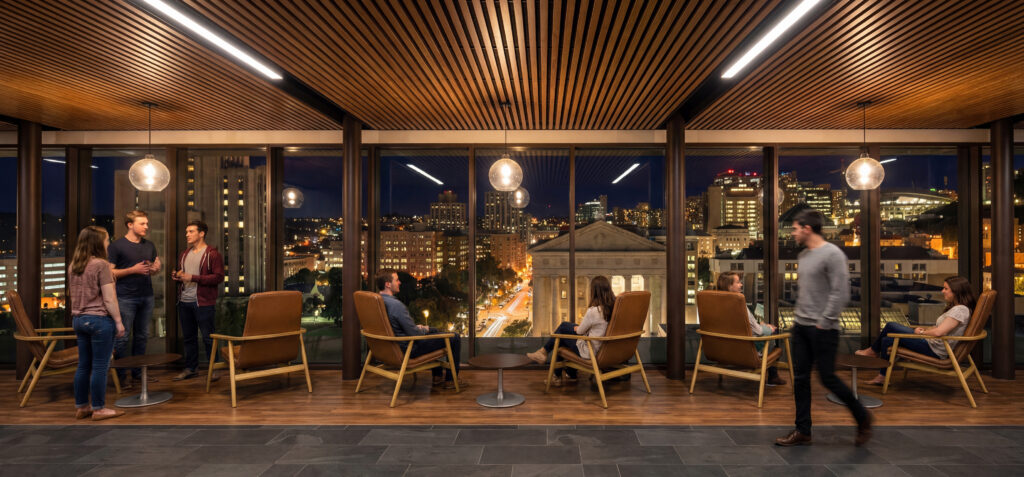
The 450+ bed residence hall is organized as a vertical village, creating intentional residential neighborhoods that encourage connection and community within a dense urban site. Hall communities, study lounges, shared “porch” spaces, and double-height gathering areas foster both chance encounters and focused academic engagement. Dining is central to the experience, activating the street edge with flexible venues, hospitality-inspired seating, and terraces that extend student activity into the public realm. At the upper levels, gathering spaces create opportunities for intellectual exchange and community building with panoramic views across Pittsburgh.
Beyond housing, the project reflects a broader ambition: to create a memorable arrival sequence and a welcoming front door to campus that supports student life, strengthens the urban fabric, and signals Pitt’s continued investment in the future of higher education.