This is my first year as VMDO’s Director of Sustainability, and my first time overseeing our 2030 reporting process. It seemed like the right opportunity not only to look candidly at VMDO’s results, as my predecessor Michelle Amt has done in past years, but also to cast the net a bit wider and consider why 2030 matters on a global scale and how we can move forward.
I chose to address an audience that includes sustainable design leaders as well as those who may not be as familiar with the 2030 Challenge. Why is this important? The built environment is directly and indirectly responsible for 37% of global CO₂ emissions, 50% of global material extraction, and 28% of global energy consumption (2024 GlobalABC Report).
We are less than four years from 2030, and while meaningful progress has been made on the climate front, it has not been enough to put global emissions on a path that limits warming to 1.5°C above pre-industrial levels. Meeting that challenge will require more committed people to put us on a better trajectory toward carbon neutrality. It felt fitting that during Climate Week in New York City, UK Foreign Secretary Ed Miliband said, “No country can tackle climate change on its own, but we can do it together.”
A Global Perspective
During the 1970s, the world’s total greenhouse gas (GHG) emissions increased almost tenfold compared to 1900 levels, while global average temperatures continued a steady upward trend. In response, scientists raised the first formal environmental red flag to world governments at the World Climate Conference in Geneva, Switzerland, in 1979. They warned that climate change could have profound impacts on our planet, and something needed to change.
Not until 2005 did the first climate treaty, the Kyoto Protocol, enter into force, requiring countries to reduce their greenhouse gas emissions by an average of 18% below baseline levels. Around the same time, Edward Mazria founded the non-profit organization Architecture 2030 and created the 2030 Challenge, which aims for new buildings and major renovations to be zero carbon by 2030. One year later, the AIA adopted this program and formed the 2030 Commitment.
The 2015 Paris Agreement, another treaty under the UNFCCC adopted at COP21, sits at the heart of today’s global climate response. 195 participating countries committed to developing national climate action plans aimed at limiting the increase in global average temperatures to 1.5°C above pre-industrial levels by the end of the century. Scientists warn that if these milestones are not met, avoiding the most severe impacts of climate change becomes increasingly difficult. This global timeline provides the context for why initiatives like the 2030 Challenge and AIA 2030 Commitment exist today.
To date, global temperatures rose approximately 1.2°C over the past 125 years. During the last decade alone, the world experienced longer and more intense heat waves, increased flooding, and prolonged droughts. These changes affect human health, reduce access to clean water, threaten marine ecosystems, and impact entire communities and nations. The UNFCCC, which oversees the annual Conference of the Parties (COP), warns that even if countries meet their current emissions-reduction commitments, global temperatures are still projected to increase by approximately 2.2°C by 2100 (see Climate Action Tracker).
Although this may seem daunting and, quite frankly, depressing, there are glimmers of hope. In its November 2025 update, Climate Analytics and the NewClimate Institute reported the following:
- Without the Paris Agreement, the world would be on track for a 3.6°C increase in global mean temperature.
- For the first time, global electricity generated by solar and wind surpassed coal-generated electricity.
- Global greenhouse gas emissions are projected to decline by approximately 7 GtCO₂e by 2035, roughly equivalent to removing the emissions of 1.6 billion gasoline-powered cars (IPCC Assessment Report).
The Architect’s Impact
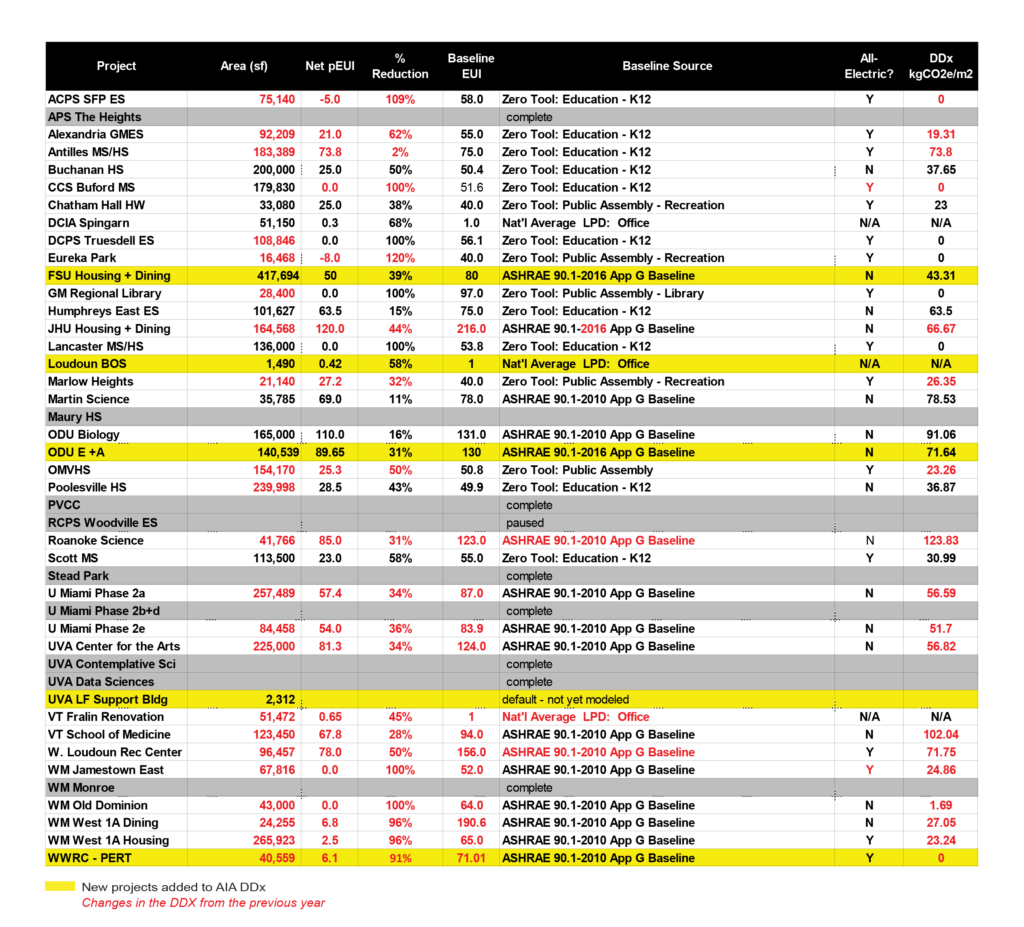
This year’s 2025 AIA 2030 By the Numbers report confirmed that, despite adding 70 billion square feet of new building area in the United States in 2023, building emissions dropped by 31.2% compared to 2005 levels. Of the roughly 24,000 projects reported, there was an average 48% energy reduction compared to a selected baseline, and 15 of the 458 reporting firms met the 90% predicted Energy Use Intensity (pEUI) reduction target for 2024.
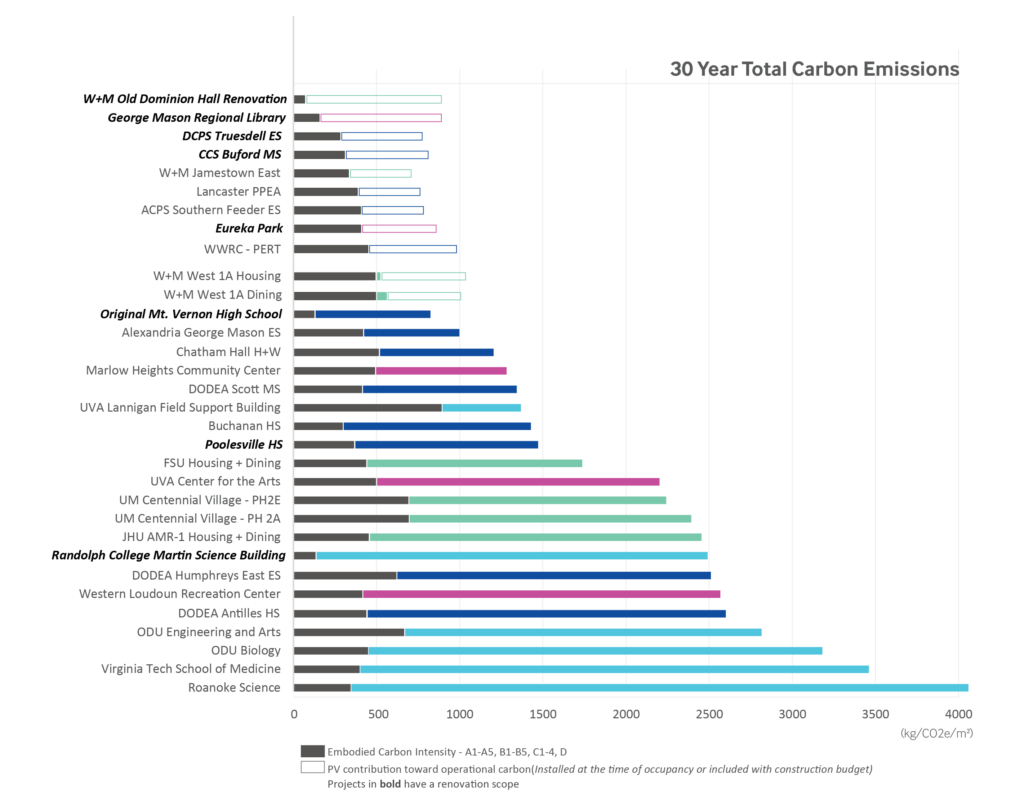
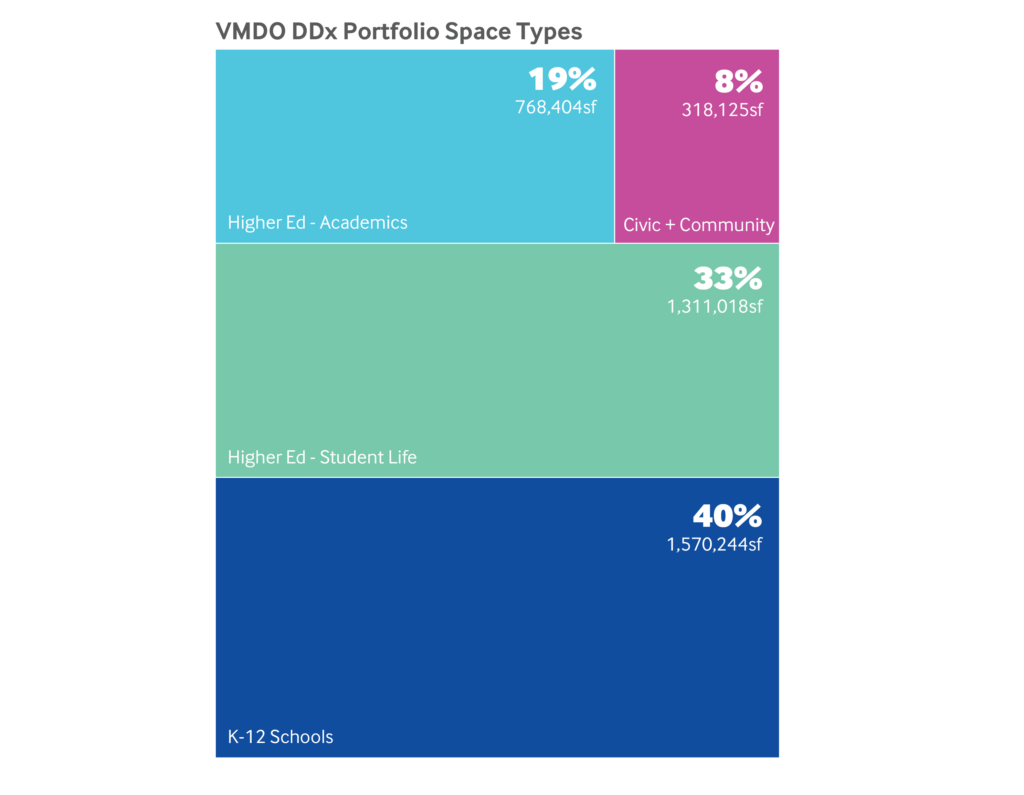
At VMDO, our 2030 report for 2025 resulted in a 46% reduction for the entire portfolio. It comprised 52% higher education projects, which include dining and laboratory requirements, 40% K–12 projects, and 8% civic and community projects. 655,000 sf (17%) of these projects were designated net zero, meaning photovoltaics (PVs) were either installed at the time of occupancy or included in the construction budget.
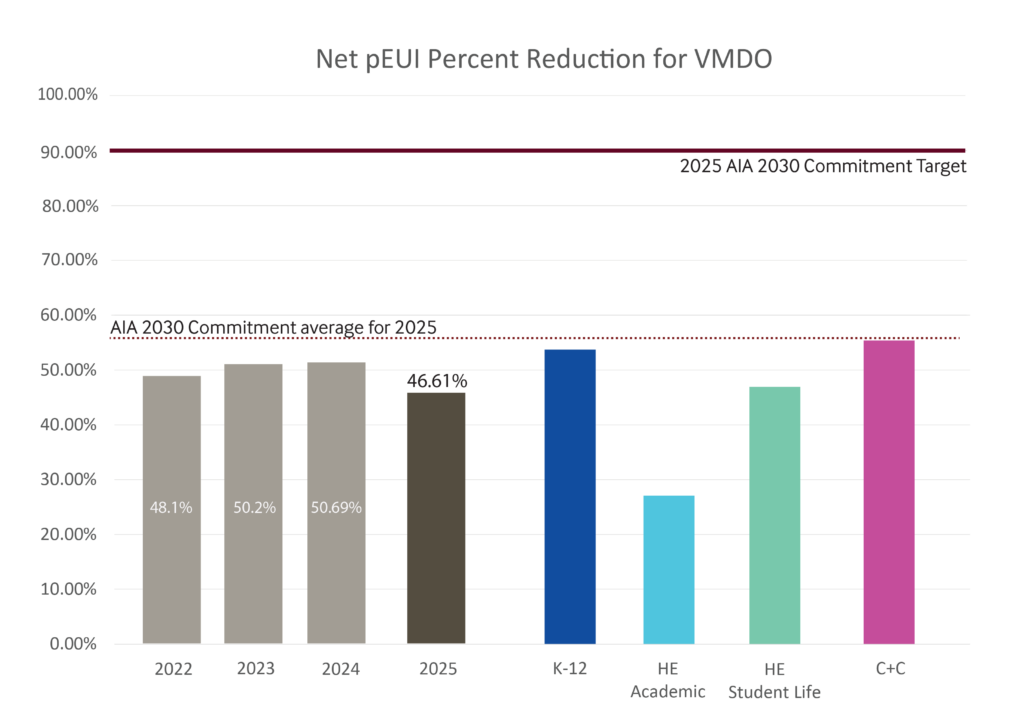
Like many of the other reporting firms, we did not meet the 90% pEUI reduction set for 2025. However, since joining the AIA 2030 Commitment, we gained an arduous but good data tracking habit. This is our tenth year reporting with the AIA’s DDx platform, and we now have a wealth of project energy data to decipher and analyze. Those working in the building performance industry and familiar with the reporting process know that the percent reduction is just a number. It does not highlight the challenges and successes of an individual project’s journey toward carbon neutrality. Although the DDx allows firms to compare to other projects with similar climates and project types, it is still not an apples-to-apples comparison. Further clarity and transparency around baselines are needed to improve the comparative analysis between reporting firms.
The 2030 Commitment is far from perfect; however, it does make us pause and take a breath to collect ourselves. It highlights that the needle is slowly moving toward carbon neutrality (although not as fast as we would like), and it encourages transparency within the architecture community and within our own firm. This act of transparency is key, as it makes us honest and allows reflection on how to approach the next project with an improved ‘carbon’ lens.
A Path Forward
Where does this leave us, and how do we move forward? I recently read the United Nations Environment Programme’s (UNEP) recent report, ‘Limiting Overshoot,’ to find answers or direction, and in the Foreword, Inger Andersen, the UNEP Executive Director, stated:
“So, I call on governments—and on everyone with the power to effect change—to act with urgency and determination. This is not the future we sought. A return to 1.5°C is not assured. But limiting the magnitude, duration and consequences of overshoot, while preserving the possibility of bringing temperatures back down, is the best remaining option to protect vulnerable people, reduce losses and secure a livable future for all.”
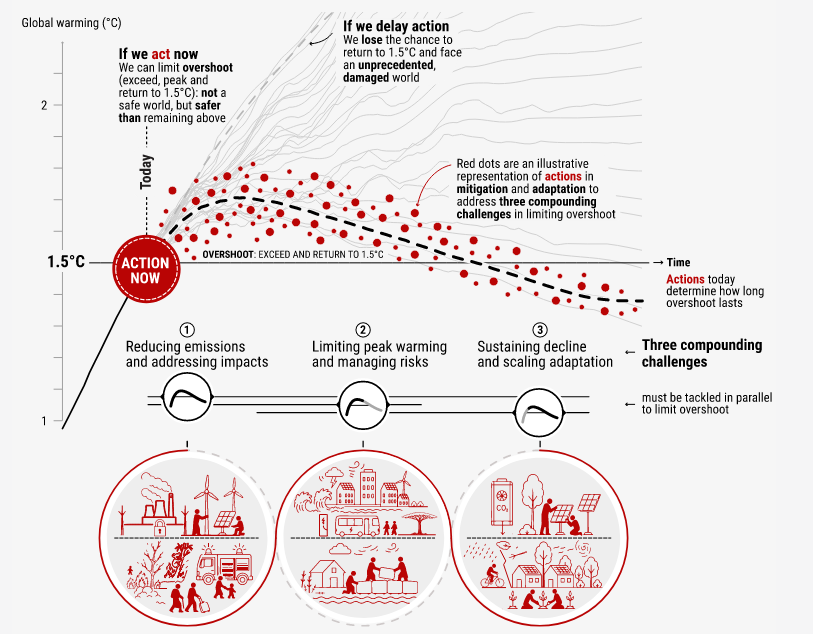
Urgency and action. A resonating theme found in the report highlights that these are necessary to further mitigate global emissions and global warming. The graph below illustrates a continuous stream of actions, whether stringent policy changes or decarbonization efforts, needed to push us below 1.5°C. It highlights that we shouldn’t wait for one action to be completed before starting the next. These efforts must be tackled concurrently but also ‘radically re-imagined.’
As far as the AIA 2030 Commitment is concerned, the collection and transparency of data should not stop. For those architecture firms hesitant to sign on the dotted line, it is not too late. The COP30 President, André Corrêa do Lago, stated:
“Transparency is indispensable to implementation. Without transparency, there can be no credible way of assessing whether we are delivering on the commitments we have made, learning from best practices and correcting courses where needed… If implementation is the measure of our collective resolve, transparency is what gives that resolve visibility and credibility.” – UN Climate Change News
Should we keep on keeping on? Absolutely. However, we need to move forward with more urgency, innovation, and persistent communication and engagement with our peers, community, and policy makers about our role in the progress toward zero carbon emissions. What am I going to do? As the Director of Sustainability, my role is to continue to unpack our 2030 data and publish related case studies, provide the resources and analysis needed for projects to further reduce or eliminate carbon emissions, and communicate better with our local and state policy makers about the urgency and action needed to help support and protect our own Mother Earth.