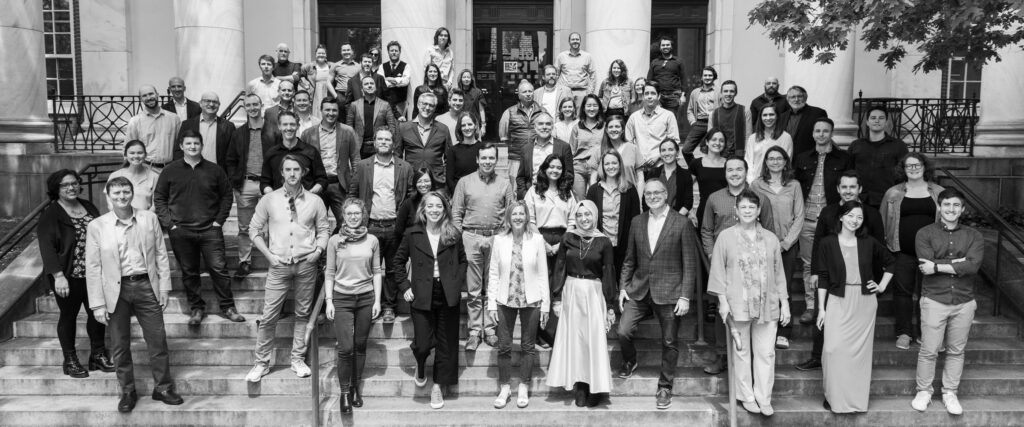
This spring, VMDO launched DECADES, an internal conversation series tracing the arc of fifty years of practice, one decade at a time. Each session gathers the people who built something here: the founders, the staff, the clients, and the colleagues. Together, they construct a living account of what this firm believed, what it wrestled with, and what it chose to carry forward.
The first session covered 1976 to 1985.
What follows is not a summary. It is an attempt to honor what was said.
The Question Behind Everything
Robert Vickery opened his introductory architecture course at UVA with a question he wrote on the blackboard and never fully answered:
“What does it mean to make a mark upon the land?”
He asked it because he believed the question mattered more than any answer. That question has lived at the center of this firm ever since.
How It Started
The firm did not begin with a grand plan. Robert Vickery had come to UVA in 1970 to redesign the architecture curriculum. He believed a four-year undergraduate program could function as a degree in creative problem solving: two years of broad liberal education, two years of concentrated design. His students graduated knowing not only how to draw buildings, but how to think critically about the world around them.
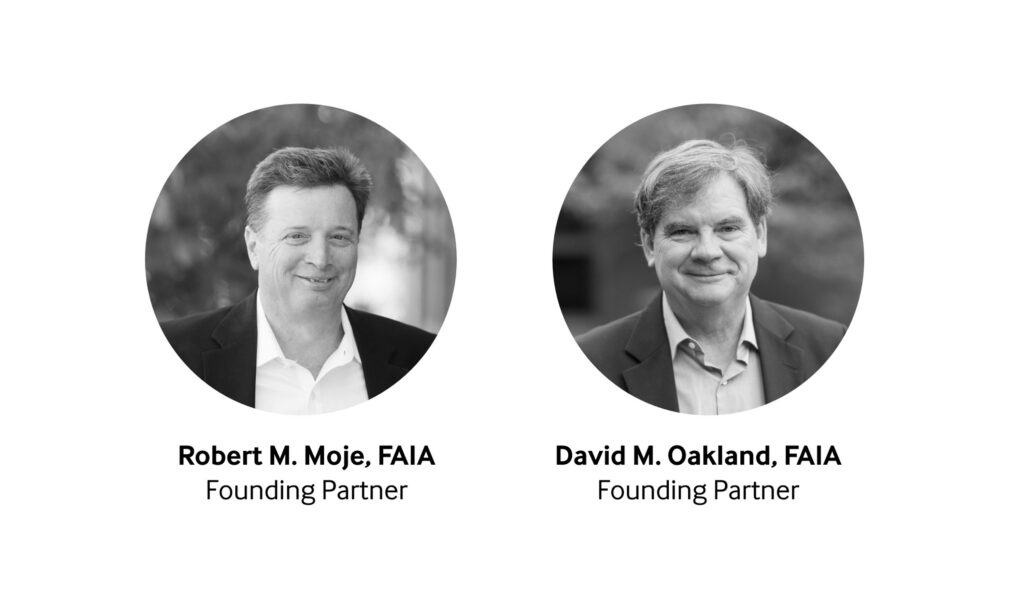
When he decided to start a practice, he brought his best students with him. Bob Moje and David Oakland graduated in 1976 and, together with Lawson Drinkard, formed the founding partnership of what would become VMDO- the M, O, and D that would define the practice’s name and its early years. The first commission was a master plan for Woodberry Forest School. The first five years were sustained largely by the work that grew from it.
“We were literally figuring it out ourselves,” David Oakland recalled. “We had no help.” Technical knowledge was built project by project, often with guidance from structural engineer Jim Harris, whose background in architectural engineering helped the young firm understand how to actually put buildings together.
But something greater was being built at the same time.
Adopting People Into the Family
“We didn’t hire people,” Oakland said. “We adopted them.”
In Charlottesville in 1976, that was not just warm sentiment. It was a necessity. There were few other firms to go to, so the model became: grow slowly, develop people from within, keep them.
Bob Moje talked about staying with people through the cycles, not shedding staff when work slowed. What grew from that was a firm whose culture was transmitted through relationships.
That same instinct extended outward. From the earliest years, Vickery believed the firm belonged to its community as much as to its clients. An annual gathering took shape where staff, clients, and colleagues from across the profession were invited to see the work, share a meal, and be in the same room together. What began as a modest holiday party became one of VMDO’s most enduring traditions, a signal that the firm understood itself as part of something larger than any individual project.
A Deliberate Choice About Who We Would Be
Seven years in, the firm took stock. Robert Vickery was stepping back from practice. The question of what VMDO wanted to be was becoming harder to avoid.
The partners rented a house at Wintergreen for a weekend, brought in consultants, sketched flip charts in colored markers. Should the firm move to New York or Chicago? Stay in Charlottesville? Specialize or stay broad? The conversations circled without resolution.
“Late on the last night, it was just Bob Moje and a consultant named Don McMillan sitting with all those pages. Gradually, a direction came into focus.”
Why not focus on educational architecture?
By most conventional logic, it seemed like the wrong move. Robert Vickery’s most repeated rule was: get the job, get the job, get the job. Focusing on a single type of client seemed to contradict everything they had learned about resilience.
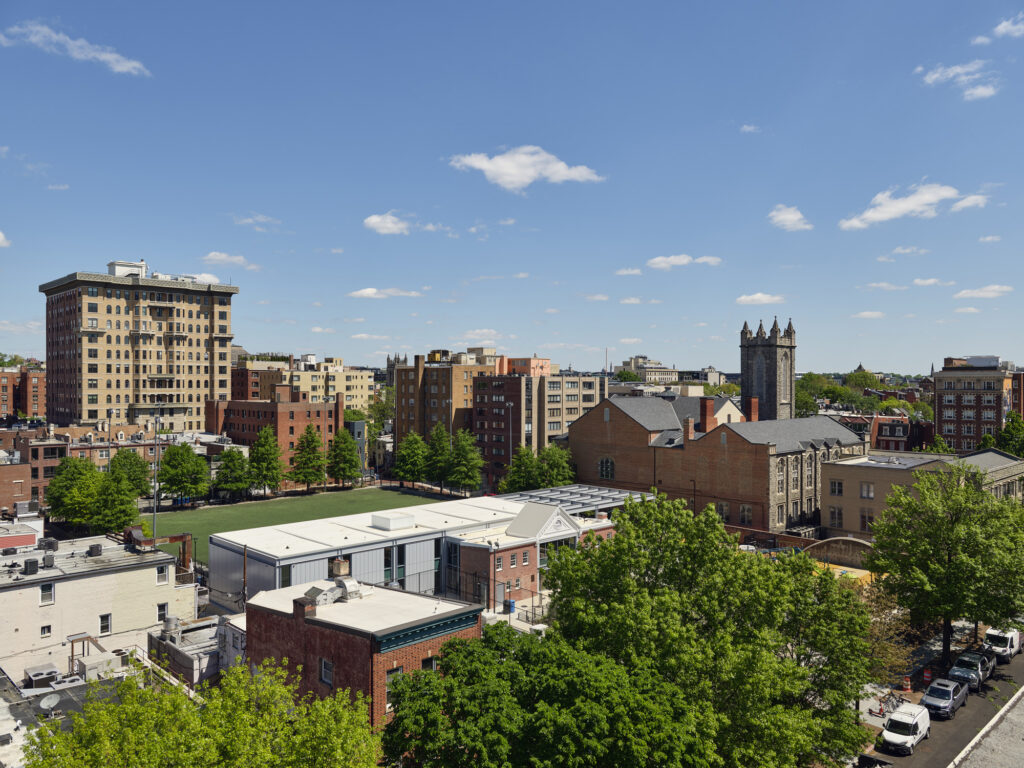
But they were in Charlottesville, after all. Thomas Jefferson had built some of the most notable educational architecture in America a mile away. And the school systems around them were moving away from prefabricated or prototypical building types toward buildings that could shape experience rather than simply contain it.
“It made sense to us,” Oakland said, “but nobody else agreed at the time.”
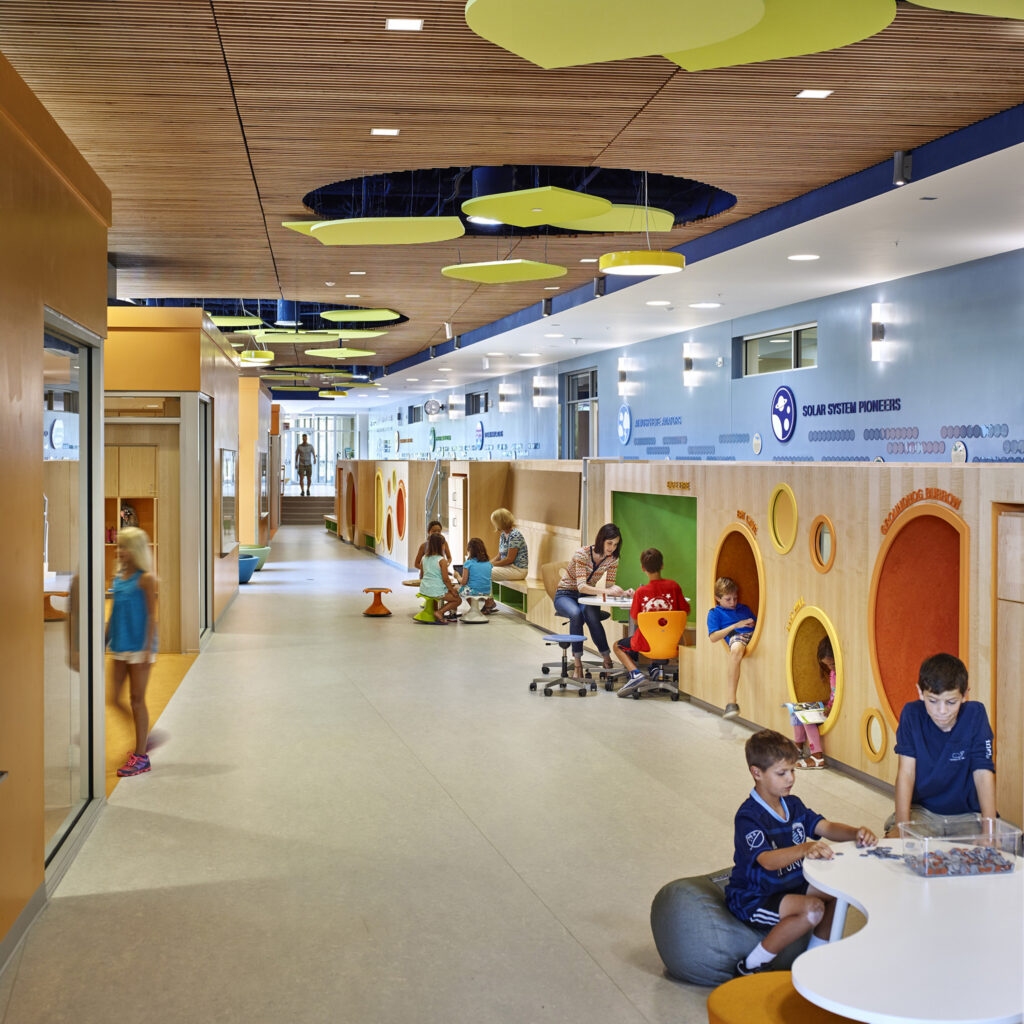
The first real proof was Scottsville Elementary School, completed with a school board that gradually began to understand that architecture could matter to a child and make a difference in their upbringing.
The Measure of Success
Near the end of the session, the conversation turned to recognition: the fellowships, the Fitz-Gibbon Firm of the Year Award, the buildings in journals. Both Bob Moje and David Oakland arrived at the same place, independently.
The awards are not the measure.
“The clients like our work,” Moje said. “And most everyone I’ve ever worked with on major projects are still my friends.”
Oakland spoke about ethics: always paying payroll, always paying consultants, always working in good faith. “I don’t know that there are many architecture firms who can say that after fifty years.”
What they were describing was a practice built around the quality of its relationships. The buildings were the evidence. The relationships were the lasting result.
Still Asking
At the close of the session, Bob Moje offered a reflection for the staff of VMDO in 2050. He hoped architects would continue returning to buildings rooted in craft, humanity, and a deep connection to place – buildings that continue to ask the question first posed in 1972: What does it mean to make a mark upon the land?
Fifty years of practice. Hundreds of buildings. Generations of staff, colleagues, and collaborators shaping thousands of lives through spaces designed to inspire. And still, the answer lives in the work ahead.
Decades: Design Thursday is a series marking VMDO’s 50th anniversary. Each session gathers colleagues across generations to reflect on a decade of practice. Stay tuned for our next session overview: 1986 to 1995.